Beachfront vs Seaside Hotels: The Real Difference in Location, Price, and Experience
Beachfront vs Seaside Value Calculator
Compare Your Stay Options
Enter your trip details to see where you get the best value.
- Room Cost: $0
- Transport: $0
- Room Cost: $0
- Transport: $0 (Direct Access)
Enter your details and click calculate to compare.
Picture this: you’ve saved up for months, booked your flights, and finally clicked "confirm" on that dream vacation. You wanted a place right by the water. When you arrive, though, you’re standing on a balcony looking at... a parking lot. Or worse, you have to walk ten minutes through a busy strip of souvenir shops just to feel sand between your toes. It happens more often than you’d think because the terms beachfront and seaside get used interchangeably by marketing teams, even though they mean very different things for your wallet and your experience.
If you are planning a trip to the coast, understanding this distinction is crucial. One promises direct access; the other promises proximity. Getting it wrong can turn a relaxing getaway into a logistical headache. Let’s break down exactly what these labels mean, how they affect your stay, and which one actually fits your travel style.
The Literal Definition: Direct Access vs. Proximity
At its core, the difference comes down to real estate boundaries and physical layout. A beachfront property is a building constructed directly on the edge of the shoreline, where the structure or its immediate grounds meet the sand or water. There is no road, no sidewalk, and no other building separating you from the beach. If you step out your back door or off your patio, you are literally on the sand.
In contrast, a seaside property is a location situated near the coast but separated from the actual beach by infrastructure such as roads, boardwalks, or other buildings. "Seaside" is a broader term. It means you are close enough to smell the salt air and hear the waves, but you might need to cross a street or walk around a block to reach the water.
This distinction matters because "near" is subjective. In some cities, "seaside" means a two-minute walk. In others, it could be a fifteen-minute trek uphill. Beachfront is objective: if there is a fence, a road, or a neighbor’s house between you and the tide line, it is not beachfront.
The View Factor: What Are You Actually Seeing?
The most visible difference is the view from your window. This isn’t just about aesthetics; it affects your entire mood during the stay.
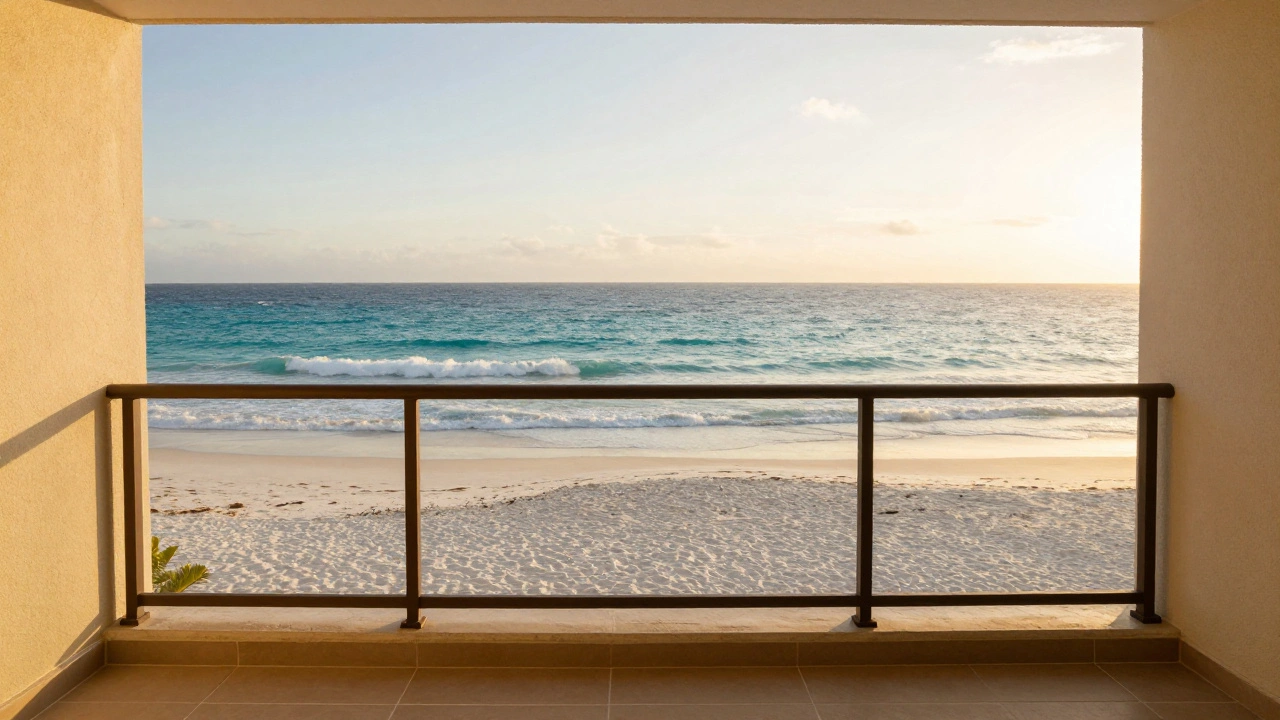
In a true beachfront hotel, your primary view is the horizon. You see the open water, the sky, and the beach itself. Even if your room is on the lower floor, you are likely looking at people walking dogs or kids digging for shells. There is a sense of openness and privacy because the only thing sharing your visual space is nature.
With seaside accommodations, the view is often obstructed. You might look out onto a bustling promenade, a row of parked cars, or the backs of neighboring buildings. Sure, you might catch glimpses of the ocean over the rooftops, but you aren’t immersed in it. If you book a "seaside" room expecting an unobstructed ocean panorama, you will likely be disappointed unless you specifically request a "partial ocean view" or pay extra for a premium tier.
| Feature | Beachfront | Seaside |
|---|---|---|
| Access to Sand | Direct (steps away) | Indirect (walk required) |
| Primary View | Ocean/Horizon | Street/Promenade/Partial Ocean |
| Noise Level | Natural (waves/wind) | Urban (traffic/pedestrians) |
| Price Point | Premium (High) | Moderate to High |
| Amenity Focus | Private pools, beach clubs | Restaurants, bars, nightlife |
Cost Implications: Why Beachfront Costs More
You pay for land scarcity. In coastal cities like Miami, Barcelona, or Sydney, land directly touching the water is incredibly limited. Developers charge a premium for those square meters. That cost is passed directly to you in the form of higher nightly rates.
On average, beachfront hotels can cost 30% to 50% more than comparable seaside hotels with similar star ratings and amenities. If you are traveling on a budget, choosing a seaside option allows you to stay in a larger room or a newer building while still being close to the action. However, keep an eye on hidden costs. Some beachfront resorts charge extra for lounge chairs or umbrellas, whereas seaside hotels might include these perks to attract guests who don’t have direct access.
Also consider transportation. If you choose a seaside hotel located slightly inland, you might save money on the room but spend more on taxis or rideshares to get to the beach daily, especially if you plan to return mid-day for a nap or lunch. Calculate the total trip cost, not just the nightly rate.

Noise and Atmosphere: Peace vs. Pulse
The atmosphere of your stay changes drastically based on which side of the road you pick. Beachfront properties tend to be quieter. The dominant sounds are the crashing waves, the wind, and perhaps distant seagulls. These natural white noises are generally soothing and conducive to sleep. Because there are fewer roads running along the immediate shoreline, traffic noise is minimal.
Seaside hotels, however, are often situated along main thoroughfares or tourist promenades. This means you’ll hear traffic, buses, and the chatter of crowds. If you are a light sleeper, this can be a dealbreaker. On the flip side, if you thrive on energy and convenience, seaside might be better. You are usually closer to restaurants, shops, and nightlife without needing to drag yourself across the hot sand after dinner.
Think about your travel companions. Families with young children often prefer beachfront for the ease of stroller access and the safety of having the beach right there. Solo travelers or couples seeking romance might appreciate the secluded, quiet vibe of a beachfront suite. Conversely, digital nomads or social travelers might prefer the vibrant ecosystem surrounding a seaside hotel.
Amenities and Services: What Do You Get?
The type of amenities offered often reflects the location’s constraints. Beachfront hotels frequently invest in private beach experiences. They may offer dedicated beach concierges, reserved sunbed areas, or private cabanas. Since they control the immediate environment, they can curate a more exclusive experience. Many also feature infinity pools that visually merge with the ocean, enhancing the luxury feel.
Seaside hotels, lacking direct beach access, often compensate with robust on-site amenities. You might find larger fitness centers, multiple dining options, spas, and entertainment venues within the hotel walls. They compete on service and comfort rather than location exclusivity. If you plan to spend most of your time exploring the city or visiting attractions away from the coast, a seaside hotel with great dining and transport links might offer better value.
Check the fine print regarding "beach access." Some seaside hotels claim beach access via a shared public path. Others may have partnerships with nearby beach clubs. Always verify if the access is free and direct, or if it involves navigating through crowded public spaces.

How to Verify Before You Book
Don’t trust the photos alone. Marketing images can be misleading. Here is how to double-check the true nature of the property:
- Use Street View: Open Google Maps or Apple Maps and use the Street View feature. Look for the gap between the hotel and the water. Is there a road? A park? Another building? If you see asphalt between the lobby and the sand, it’s seaside.
- Read Recent Reviews: Search reviews for keywords like "walk to beach," "road noise," or "view blocked." Guests often mention the exact distance and obstacles they encountered.
- Check the Map Overlay: Zoom in on the map provided by the booking site. Does the hotel icon touch the blue area representing the ocean? If it’s set back even slightly, it’s likely seaside.
- Contact the Hotel: Ask a direct question: "Is the beach accessible directly from the hotel grounds without crossing a public street?" Their answer will clarify any ambiguity.
Which One Should You Choose?
Your choice depends on your priorities. If your goal is relaxation, privacy, and waking up to the sound of waves, pay the premium for beachfront. It is worth it for honeymoons, anniversaries, or stress-free family vacations where minimizing friction is key.
If you prioritize value, variety, and urban exploration, go seaside. You’ll likely get a bigger room, better food options nearby, and easier access to public transport. It’s the smarter choice for solo travelers, groups of friends, or anyone who plans to spend less than half their day on the sand.
Ultimately, both offer a connection to the coast. But knowing the difference ensures you get the specific kind of connection you paid for.
Is a beachfront hotel always better than a seaside hotel?
Not necessarily. While beachfront offers superior views and direct access, it comes at a higher price point and may lack the vibrancy and convenience of nearby restaurants and shops found in seaside locations. For travelers who prioritize budget and urban exploration, seaside can be a better overall experience.
What does 'ocean view' mean if it's not beachfront?
An 'ocean view' in a seaside hotel typically means you can see the water from your window, but it may be partial, distant, or obstructed by other buildings or trees. It does not guarantee that you are adjacent to the beach or that you have direct access to the sand.
Are beachfront hotels noisier due to wind and waves?
Generally, no. Most travelers find the sound of waves and wind to be soothing white noise compared to urban traffic. However, during severe storms, wind noise can be louder. Modern beachfront hotels are well-insulated to minimize this, making them quieter than roadside seaside hotels.
Can I find affordable beachfront hotels?
Yes, but they are rarer. You can find affordable beachfront options in emerging destinations, during the off-season, or by choosing smaller boutique hotels or guesthouses rather than large luxury resorts. Be prepared to compromise on room size or modern amenities.
What should I look for in a seaside hotel to ensure good beach access?
Look for hotels that explicitly mention a 'private path' to the beach or are located on a pedestrian-friendly promenade. Check reviews for mentions of 'easy beach access' and verify using Street View that there are no major highways or complex intersections between the hotel and the shore.