Do Airports Provide Sleeping Rooms? A Guide to Airport Lounges, Pods, and Hotels
Airport Sleep Strategy Calculator
Privacy
I need a quiet, enclosed space away from crowds.
Comfort
I want a real bed, shower, or deep recliner.
Speed
I need a quick fix near the gate with no hassle.
Recommendation
Imagine this: your flight is canceled due to a storm, or you have a six-hour layover in the middle of the night. Your eyes are heavy, your back hurts from sitting on hard plastic chairs, and the terminal noise is deafening. You just want to lie down. But can you actually find a bed at an airport?
The short answer is: it depends entirely on where you are flying. Some airports offer private sleeping rooms, luxury sleep pods, or even full-service hotels inside the secure area. Others don’t allow you to stay overnight at all. Knowing what options exist before you land can save you from a miserable night of tossing and turning.
The Rise of In-Terminal Sleep Solutions
In the past, if you wanted to sleep at an airport, you grabbed a blanket, found a quiet corner, and hoped no one kicked you. That’s changing fast. Travelers now demand comfort, privacy, and hygiene. This shift has led to three main types of sleeping accommodations directly within airport terminals.
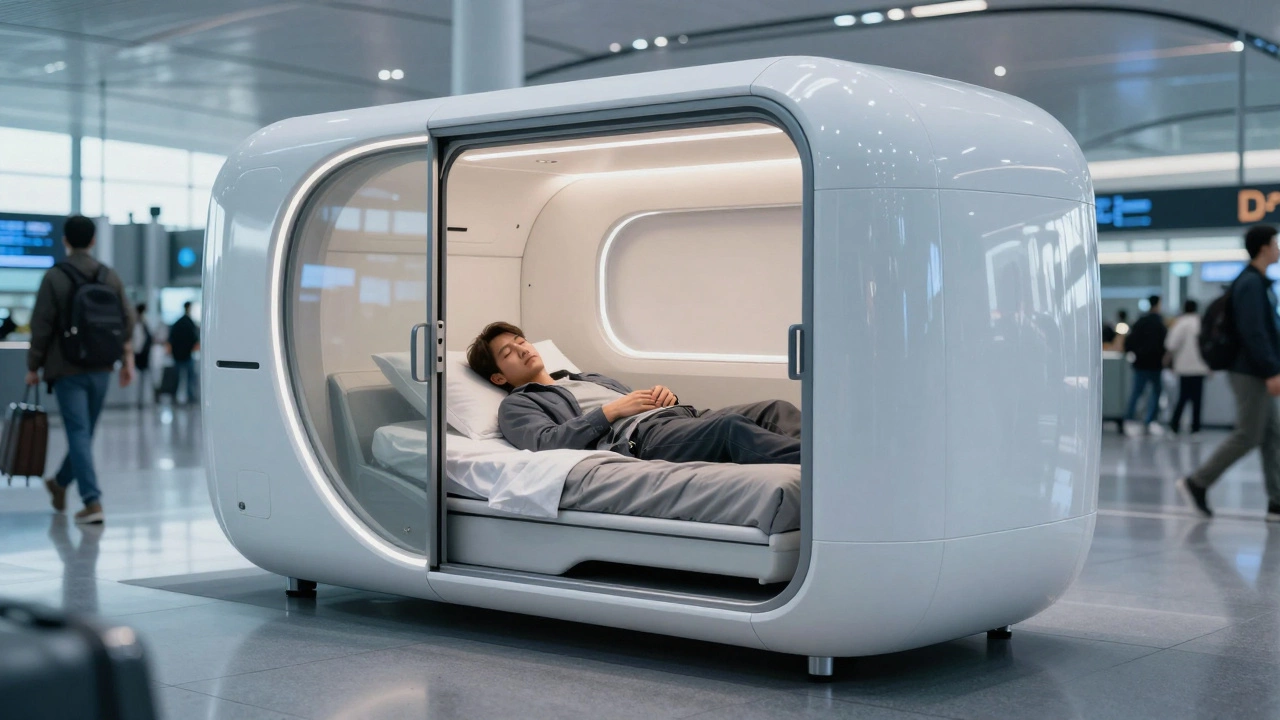
First, there are Sleep Pods, which are compact, capsule-like units designed for short naps. These are popular in Asia and increasingly common in Europe. They usually cost between $30 and $60 for a few hours. Second, we have Private Sleeping Rooms. These are actual hotel-style rooms located airside (past security). You can book them by the hour or for the night. Finally, many premium Airport Lounges now feature shower suites and reclining chairs that mimic beds, though they rarely offer flat surfaces for sleeping.
| Feature | Sleep Pods | Private Rooms | Premium Lounges |
|---|---|---|---|
| Privacy | High (enclosed) | Very High (door locks) | Low to Medium |
| Amenities | Lights, power, Wi-Fi | Bed, TV, bathroom, shower | Showers, snacks, drinks |
| Cost | $30-$60 / 3-4 hours | $100-$300+ / night | $50-$100 entry fee |
| Best For | Quick naps | Overnight stays | Relaxing, not sleeping |
Where Can You Find Real Beds?
If you need a real mattress and a lockable door, you’re looking for an in-terminal hotel. These aren’t just franchises attached to the outside; they are fully integrated into the passenger flow. Here are some standout examples as of 2026.
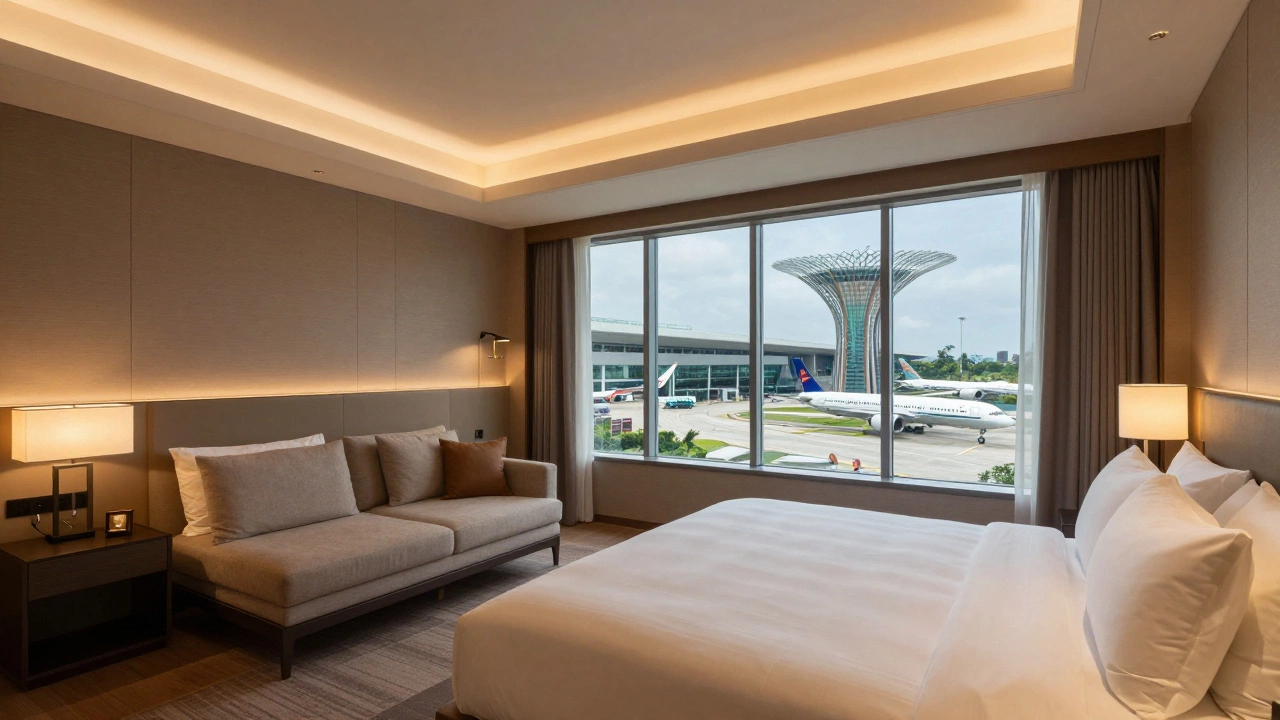
Singapore Changi Airport (SIN) is the gold standard. The Jewel complex and Terminals 1, 2, and 3 host several hotels, including the famous Hotel Transit and the luxurious Marina Bay Sands connection. You can book a room without leaving the secure zone.
Dubai International Airport (DXB) offers the Le Méridien Dubai Hotel & Conference Centre and the Premier Inn, both accessible airside. Since Dubai is a major global hub, these hotels cater specifically to transit passengers who might be stuck for 8 to 24 hours.
Tokyo Haneda (HND) and Narita (NRT) have long embraced the culture of rest. Haneda features the Hotel Sunroute Plaza right in Terminal 3. Narita has the Keio Plaza Hotel connected via shuttle or walkway. Japanese airports also excel at offering affordable capsule hotels near the gates.
In North America, options are scarcer but growing. Los Angeles International (LAX) has the Hilton LAX/Airport nearby, but true airside rooms are rare. However, new developments in hubs like Atlanta (ATL) and Chicago O'Hare (ORD) are beginning to integrate more lodging options closer to terminals.
The Capsule Hotel Trend
Not everyone needs a full bedroom. Many travelers just want to shut out the world for two hours. This is where capsule hotels and sleep pods shine. Originating in Japan, this concept has spread globally because it maximizes space and minimizes cost.
At Frankfurt Airport (FRA), you’ll find the Sleep & Fly service, which offers private cabins with beds and bathrooms. It’s located in Terminal 1, making it easy for European travelers to recharge. Similarly, Amsterdam Schiphol (AMS) introduced sleep pods that allow you to book time slots online. You scan a QR code, enter your pod, and sleep in silence while the airport buzzes around you.
These pods are ideal for:
- Passengers with long layovers (4+ hours)
- Red-eye flights where you want to rest before boarding
- Travelers who feel unsafe sleeping in public areas
The key advantage is flexibility. You don’t need to check in days in advance. Most apps let you book last-minute slots, provided availability exists. Just remember to set an alarm-you won’t get a wake-up call from a concierge.
When Lounges Aren’t Enough
Many business travelers rely on airport lounges for comfort. Premium brands like LoungeKey, Priority Pass, and airline-specific clubs (like Delta Sky Club or British Airways World Lounge) offer quiet zones, food, and drinks. But do they offer beds?
Rarely. Most lounges provide recliners or massage chairs, which are uncomfortable for deep sleep. However, some exceptions exist. The Silent Room at Singapore Airlines’ SilverKris Lounge allows limited lying-down space. The Emirates First Class Lounge in Dubai has private suites with beds, but access requires a first-class ticket or elite status.
If you hold a credit card with lounge benefits, check the amenities list carefully. Look for keywords like “shower suite” or “quiet zone.” Even if there’s no bed, a hot shower can refresh you enough to survive a long haul.
Staying Overnight: Rules and Risks
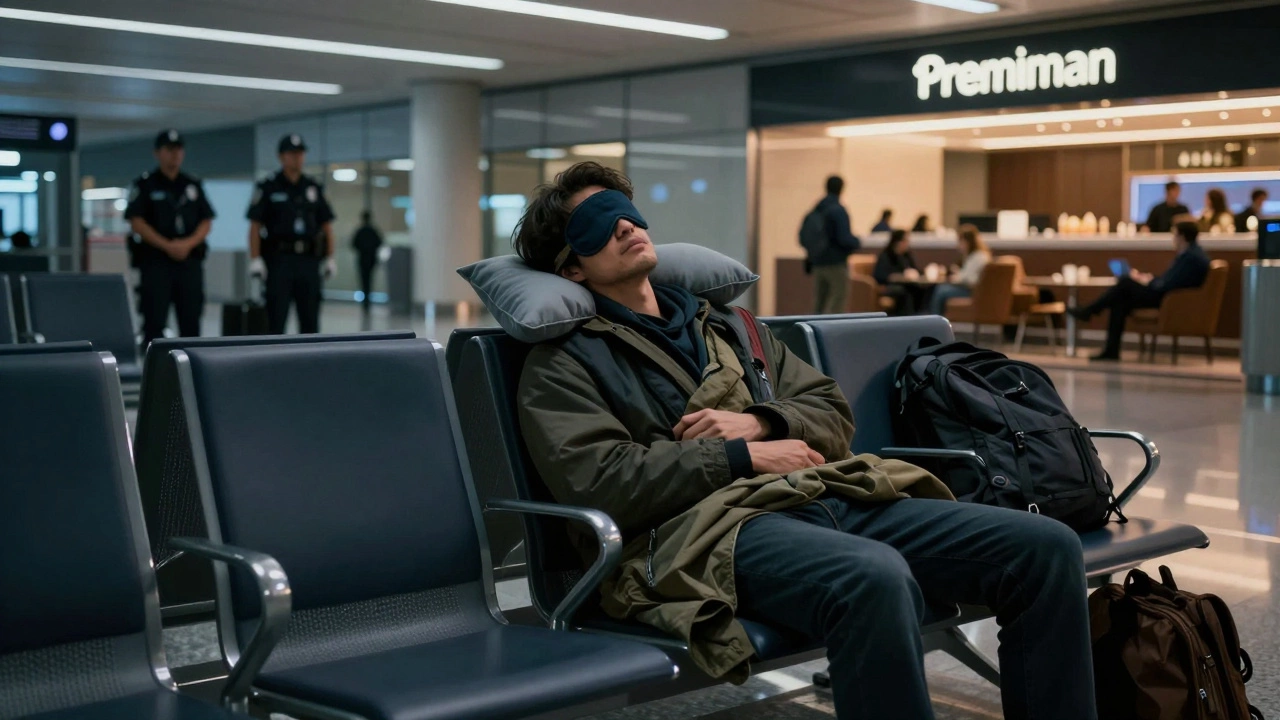
What if you can’t afford a pod or room? Can you just sleep on the floor? This is called “camping,” and it’s legal in many airports-but not all. Policies vary wildly by country and even by terminal.
Permissive Airports: Amsterdam Schiphol, Tokyo Narita, and Kuala Lumpur (KUL) are known for being traveler-friendly. They have designated rest zones, free water refills, and tolerate overnight stays. Security patrols are regular but non-intrusive.
Restrictive Airports: In the US, many airports clear out passengers after midnight. New York JFK and Washington Dulles often ask lingering travelers to leave. London Heathrow has strict curfews in certain terminals. Always check the airport’s official website for “overnight stay” policies before attempting to camp.
To make camping bearable:
- Bring a travel pillow and eye mask.
- Wear warm layers-airports keep temperatures low to manage crowds.
- Keep valuables on your body, not in your bag.
- Find a spot near restrooms but away from direct airflow vents.
Alternatives: Off-Site Airport Hotels
If in-terminal options are too expensive or unavailable, off-site airport hotels remain the most reliable choice. These properties typically offer free 24/7 shuttle buses to and from the terminals. The ride usually takes 5-15 minutes.
Look for hotels with “airside” or “transit” packages. Some, like the Hilton Garden Inn chains near major hubs, guarantee early check-in for late arrivals and late checkout for early departures. Booking platforms often filter by “distance to airport,” so sort by closest first.
Pro tip: If your layover is less than 6 hours, skip the hotel. The stress of customs, baggage claim, and shuttle rides isn’t worth the extra sleep. Instead, use a lounge or pod. For layovers over 8 hours, an off-site hotel provides better value and deeper rest.
How to Book Sleeping Rooms in Advance
You shouldn’t wait until you’re exhausted to look for a place to sleep. Use dedicated platforms to compare options:
- Minute Suites: Offers hourly rentals in US airports like Denver and Atlanta.
- YOTELAIR: Provides micro-hotels in Frankfurt, Istanbul, and other hubs.
- Transfers.com: Compares airport hotels with shuttle services.
- Airport Official Websites: Often list approved vendors for pods and lounges.
Book during peak travel seasons (summer holidays, Christmas) well in advance. Sleep pods sell out quickly because they are small in number. If you’re flexible, consider booking a day-use room instead of an overnight stay-it’s often cheaper and available even when nights are booked.
Can I sleep in my car at the airport?
Most major airports prohibit overnight parking in economy lots for security reasons. However, some regional airports allow it. Check the specific airport’s FAQ section. If allowed, park in well-lit areas and keep windows slightly open for ventilation.
Are airport sleeping rooms safe?
Yes, in-terminal rooms and pods are generally very safe. They are located within secure, monitored areas with CCTV coverage. Staff are present 24/7. Just ensure you lock your pod or room door and keep personal items close.
Do I need a visa to stay in an in-airport hotel?
Usually, no. Since you remain in the international transit zone (airside), you do not enter the country’s immigration system. However, always verify this with the airline and local embassy rules, as regulations can change.
How much does a sleep pod cost?
Prices range from $30 to $80 depending on location and duration. A typical 3-hour slot costs around $40-$50. Longer stays may incur higher hourly rates. Payment is usually made via app or kiosk upon arrival.
Which airports have the best sleeping facilities?
Singapore Changi, Tokyo Narita, and Seoul Incheon are consistently rated top for sleep options. In Europe, Frankfurt and Amsterdam lead. In the Middle East, Dubai and Doha offer luxury suites. North American options are improving but still lag behind Asian hubs.