Why Is Beachfront Land So Expensive?
Beachfront Premium Calculator
Property Value Comparison
Premium Factors
Your Beachfront Premium
According to NOAA data referenced in the article: Ocean view properties sell for 15-25% more than inland properties of identical size and condition. Your calculated premium aligns with these findings.
Walk along any popular coastline-from Miami to Bali-and you’ll see the same thing: beachfront land costs more than land just a few blocks inland. Sometimes it’s ten times more. Why? It’s not just about the view. It’s about scarcity, demand, and the hard truth that you can’t make more of it.
There’s Only So Much Beachfront to Go Around
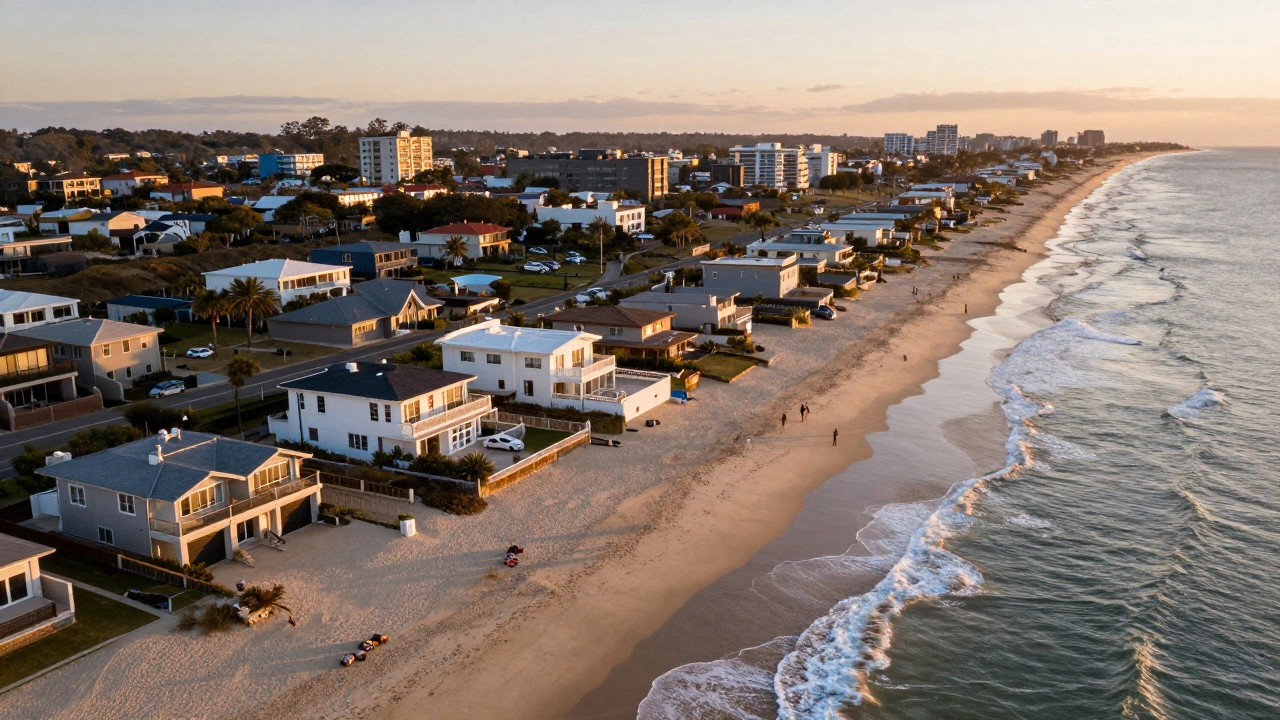
Beachfront land is finite. You can’t build new coastline. You can’t move the ocean further back. Every meter of sand or rock that touches the water is a fixed resource. In places like Malibu, the Hamptons, or the Gold Coast of Australia, there’s barely enough beachfront to satisfy the number of people who want it. That’s basic economics: when demand outpaces supply, prices climb.
Think of it like concert tickets for a sold-out show. If only 500 seats exist and 10,000 people want them, the price doesn’t stay at $50. It goes up. Beachfront land works the same way. In Florida, for example, less than 1% of the state’s total land area is directly on the ocean. Yet, over 20% of the state’s population lives within 10 miles of the coast. That pressure drives prices up.
People Pay for Views, Privacy, and Access
It’s not just about swimming. People pay for the feeling of waking up to waves, for the quiet of no neighbors behind them, for the ability to step out the door and be on the sand in 30 seconds. That’s a lifestyle premium. A study by the National Oceanic and Atmospheric Administration (NOAA) found that homes with ocean views sell for 15% to 25% more than similar homes just 200 feet inland-even if they’re identical in size and condition.
Beachfront properties also offer privacy. On a typical street, your neighbor’s backyard might be ten feet from yours. On the beach, you might have a hundred yards of open sand between you and the next house. That’s rare. And rare things cost more.
And then there’s access. No stairs. No parking lots. No walking through a gated community. Just open space. That convenience adds value. A 2023 report from the Florida Association of Realtors showed that beachfront homes sell 30% faster than non-beachfront homes in the same area. Buyers aren’t just looking for a house-they’re buying a daily experience.
Beachfront Land Is a Safe Investment
When the economy shifts, people still want to own a piece of the coast. During the 2008 financial crisis, while most property values dropped, beachfront homes in top markets like Santa Barbara and Charleston held their value better than almost any other asset class. In 2020, during the pandemic, beachfront property sales surged as people sought space, fresh air, and escape. Demand didn’t vanish-it just moved.
Investors know this. Developers don’t buy beachfront land hoping it’ll go up 5% in five years. They buy it knowing it’ll likely double-or triple-in value over a decade. That expectation gets baked into the price from day one. When you buy a beachfront lot, you’re not just paying for the land. You’re paying for its future appreciation.
Building on the Edge Costs More
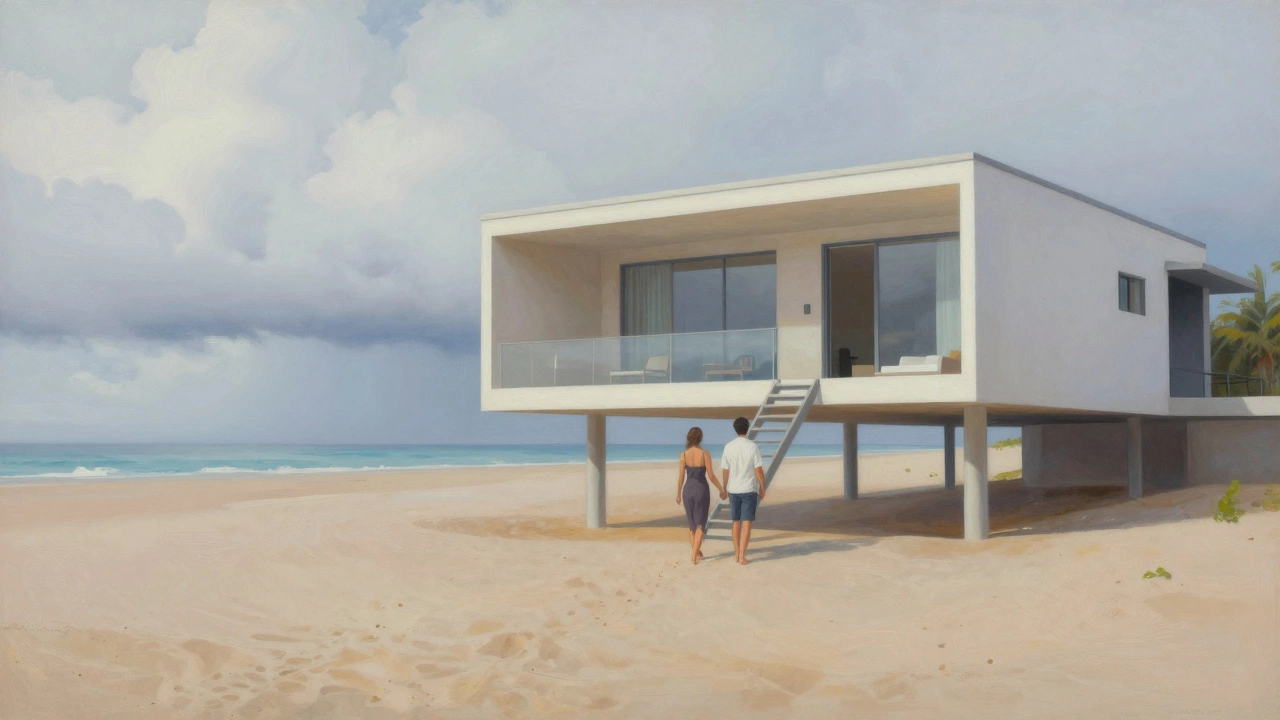
It’s not just the land that’s expensive-it’s what you have to do to build on it. Coastal zones come with strict rules. You might need special permits to build near dunes. You may have to elevate your house to avoid flood damage. In Florida, new construction in high-risk zones must meet FEMA’s 2025 elevation standards, which can add $50,000 to $150,000 to the cost of a home.
Materials cost more, too. Salt air eats through metal, wood, and concrete. You need marine-grade steel, corrosion-resistant paint, and impact-resistant glass. A standard vinyl fence might last 15 years inland. On the beach? It’s gone in five. You pay more upfront to avoid paying more later.
Insurance is another hidden cost. In coastal areas, homeowners insurance can be two to five times higher than inland. In Louisiana and parts of North Carolina, flood insurance is mandatory-and it’s not cheap. That cost gets factored into the price of the land itself. Buyers know they’ll pay more to own it, so sellers price accordingly.
Hotels and Resorts Drive Up Prices Even More
Beachfront land isn’t just bought by families. It’s bought by corporations. Luxury hotel chains like Four Seasons, Aman, and Hyatt don’t just want a view-they want total control. They buy entire blocks of beachfront to build resorts with private beaches, infinity pools, and spa decks. When a hotel chain buys 20 acres of land for a new property, it doesn’t just raise the price of that parcel-it raises the value of every nearby lot.
Look at the Caribbean. In the past 15 years, the number of five-star beachfront resorts has doubled. Each one pushes out smaller developers and local homeowners who can’t compete with corporate budgets. That’s why you see fewer private villas and more all-inclusive resorts. The land is no longer for sale to individuals-it’s locked up by investors who can afford to hold it for decades.
Climate Change Is Making It Even Scarcer
Sea levels are rising. Storms are stronger. Beaches are eroding. In places like Miami Beach, the city spends over $500 million a year just to pump sand back onto the shore. In Louisiana, entire coastal communities have vanished. That means the amount of usable beachfront land is shrinking-not growing.
When a stretch of land gets washed away, it doesn’t get replaced. It’s gone forever. That makes what’s left even more valuable. In 2024, a report from the Urban Land Institute showed that coastal properties in high-risk zones are already losing 10% of their value every decade due to climate uncertainty. But here’s the twist: that doesn’t make them cheaper. It makes them more expensive. Buyers who still want to own beachfront land are willing to pay a premium now, because they know it might not be there in 20 years.
It’s Not Just Money-It’s Emotion
People don’t buy beachfront land because it’s a smart financial decision. They buy it because it’s a dream. It’s the place they took their kids for summer vacations. It’s where they got engaged. It’s the sound they fall asleep to. That emotional value can’t be measured in square footage or price per foot. But it’s real. And it’s what turns a simple piece of land into something priceless.
That’s why, even when prices hit $10 million for a small lot, someone still buys it. Not because they need it. But because they can’t imagine life without it.