Can You Still Live in a Cottage? Real Life in a Rural Home Today
Cottage Living Cost Calculator
Estimate your monthly cost to live in a cottage full-time. This tool calculates your estimated monthly expenses based on your specific living choices.
Estimated Monthly Cost
$0
- Base costs: $0
- Heating: $0
- Water: $0
- Internet: $0
People ask if you can still live in a cottage-like it’s a relic from a fairy tale, something you only visit for weekends or retire to when you’re old. But cottages aren’t just cozy getaways anymore. They’re homes. Real homes. For teachers, remote workers, artists, and retirees who traded traffic jams for bird calls and Wi-Fi signals for woodsmoke. And yes, you absolutely can still live in one-today, in 2025.
What Does It Really Mean to Live in a Cottage?
A cottage isn’t just a small house. It’s a building type rooted in history: usually one or two stories, built with local materials, often with a stone or timber frame, a steep roof, and a chimney that actually works. In the UK, cottages were originally homes for farm workers. In Canada, they were log cabins built by settlers. Today, the word covers anything from a 400-square-foot cabin on a lake to a 1,200-square-foot stone house with a garden and a well.
The key difference between a cottage and a regular house? Simplicity. Cottages are designed for function, not flash. They don’t have walk-in closets or smart home systems built into the walls. But they do have porches where you can sit with coffee at sunrise, and windows that let in the light without needing curtains.
Modern Cottages Aren’t What You Think
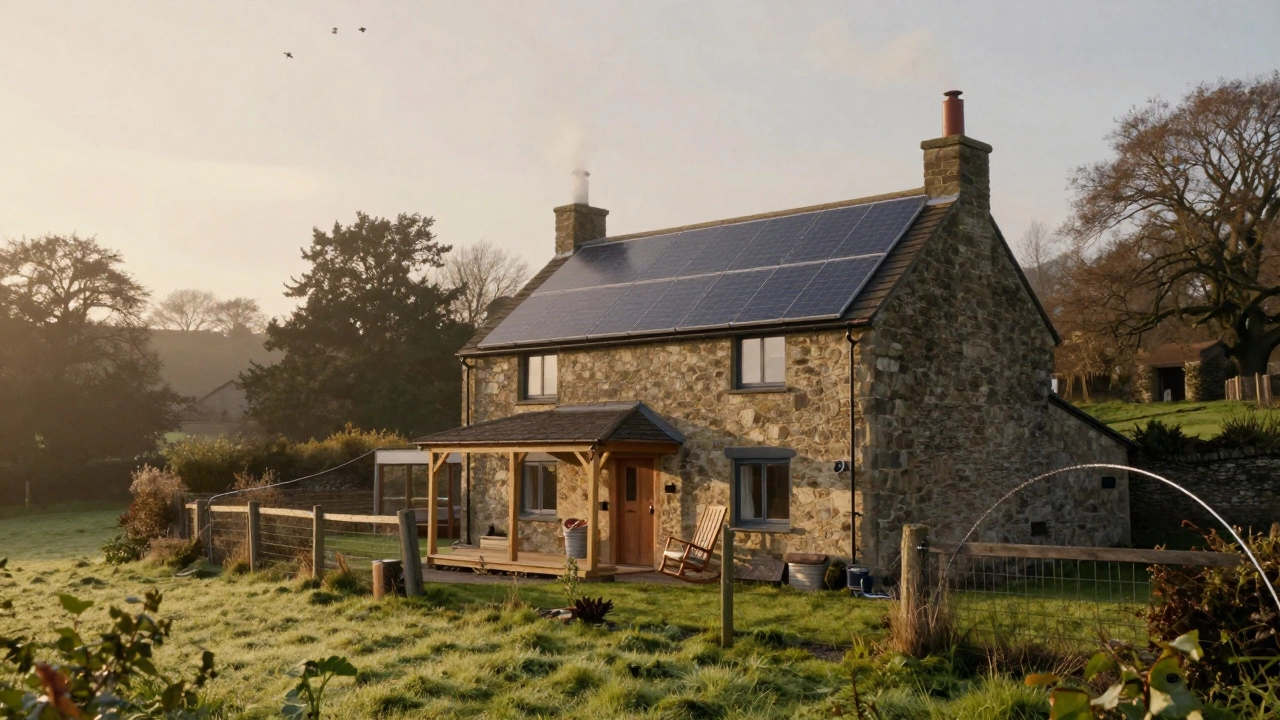
Forget the image of a leaky roof and a wood stove you have to feed every two hours. Today’s rural cottages are often upgraded with modern insulation, solar panels, and high-efficiency heating. Many have composting toilets, rainwater harvesting, and solar-powered refrigerators. You don’t need to live like a pioneer to live in a cottage-you just need to choose what matters.
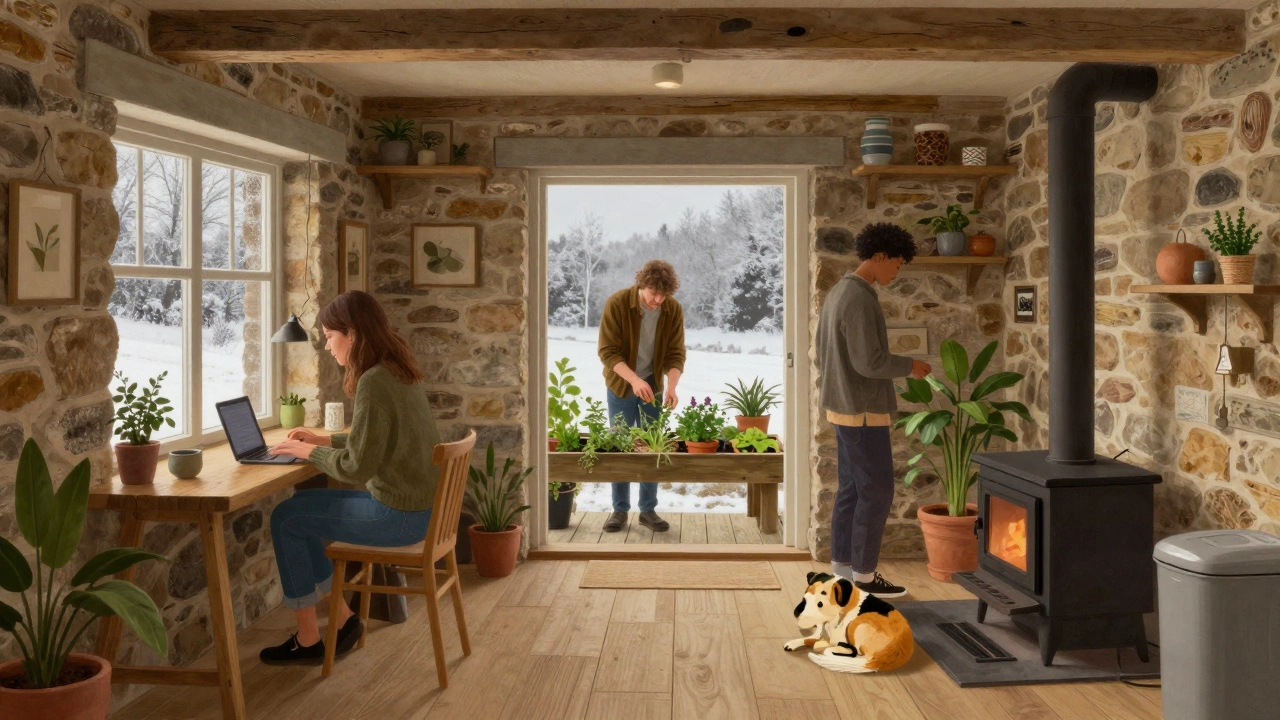
Take a cottage in northern Ontario. It has a heat pump that pulls warmth from the ground, LED lighting, and a reverse osmosis water filter. The owner, a freelance graphic designer, works from a desk by the window. Her dog sleeps on the rug. Her internet? Fiber-optic, delivered by a local provider that ran a line just for her street. She pays $450 a month for everything-electricity, water, taxes, and maintenance.
That’s not fantasy. That’s reality for thousands of people across Canada, the U.S., and Europe. The average cost of a rural cottage in Canada outside major cities is under $200,000. In some regions, you can find a fully livable, updated cottage for less than $100,000.
Is It Legal to Live in a Cottage Year-Round?
This is the question most people don’t ask until they’ve fallen in love with a place. And the answer? It depends.
In many rural areas, zoning laws allow single-family dwellings-even small ones-as long as they meet building codes. That means a cottage must have proper insulation, electrical wiring, plumbing, and a foundation that won’t shift in freezing weather. It doesn’t have to be big. It just has to be safe.
Some places have minimum square footage rules. In parts of British Columbia, you need at least 500 square feet for a legal dwelling. In Maine, you can build a 300-square-foot cottage as long as it has a septic system and connects to a well. Other areas, especially in the U.S. Midwest and Eastern Canada, are more flexible. Tiny home communities are popping up in places like Nova Scotia and Saskatchewan, where local governments are rewriting rules to encourage affordable housing.
Check your local zoning office. Ask: “Can I build or occupy a dwelling under 600 square feet as a primary residence?” Most will give you a straight answer. If they say no, they’ll often tell you what you need to change to make it legal.
What Are the Real Challenges?
Living in a cottage isn’t all firelight and wild blueberries. There are trade-offs.
- Winter heating costs-even with good insulation, cold climates mean higher energy use. A well-insulated cottage in Alberta might still cost $80 a month to heat in January.
- Access-if your road isn’t plowed, you might need a four-wheel-drive vehicle or snowshoes to get to the mailbox.
- Internet reliability-satellite internet is common in remote areas, but it’s slow and has data caps. Some cottages now use Starlink, which works well if you have a clear view of the sky.
- Medical access-if you have chronic health needs, being 40 minutes from a hospital matters.
- Social isolation-some people thrive in quiet. Others miss coffee shops and neighbors they can knock on the door for sugar.
One woman in New Brunswick moved into a cottage after her divorce. She thought she’d love the silence. After six months, she started driving 20 minutes to a small town just to sit in the library and read. She didn’t need people. She needed the sound of other people breathing.
Who Is Living in Cottages Today?
It’s not just retirees. The fastest-growing group? People under 40.
A 2024 survey by the Canadian Rural Housing Institute found that 38% of new cottage residents were under 35. They’re not running away from life-they’re redesigning it.
- A 29-year-old nurse in Quebec lives in a 600-square-foot cottage with her partner. She works nights at the hospital. The cottage lets her sleep during the day in quiet. She grows herbs on her deck and bikes to town on weekends.
- A 32-year-old software developer in Manitoba bought a 500-square-foot cottage for $85,000. He works remotely for a Vancouver startup. His monthly expenses? $320. He saves 70% of his income.
- A retired teacher in Nova Scotia lives in a 700-square-foot stone cottage built in 1923. She restored it herself, added solar panels, and now teaches pottery classes to locals on Saturdays.
These aren’t outliers. They’re part of a quiet shift. People are choosing space over square footage. Quiet over convenience. Control over clutter.
How to Start Living in a Cottage
If you’re serious, here’s how to begin-not with a dream, but with a plan.
- Visit first-rent a cottage for a month in winter. See what it’s like when the snow’s deep and the wind howls.
- Check utilities-does the property have a well? A septic system? Is the electrical panel up to code? Ask for inspection reports.
- Look at taxes-some rural areas have low property taxes. Others charge extra for water access or septic maintenance.
- Test your internet-use a speed test app on your phone. If it’s under 10 Mbps, ask about alternatives like Starlink or fixed wireless.
- Plan for storage-cottage life means less stuff. Can you live with 20 pairs of shoes? 50 books? 10 kitchen utensils?
Most people who succeed don’t buy the prettiest cottage. They buy the one that works.
Is It Worth It?
One man in Prince Edward Island sold his 2,500-square-foot suburban home for $520,000. He bought a 600-square-foot cottage for $95,000. He paid off his mortgage in two years. He eats more vegetables now. He sleeps better. He hasn’t been to a mall in three years.
He doesn’t call it a sacrifice. He calls it freedom.
Living in a cottage isn’t about escaping modern life. It’s about choosing which parts of it you want to keep. You can have solar power, fiber internet, and a composting toilet. You can have peace, quiet, and a view of the stars. You can have a life that costs less, weighs less, and feels more real.
Yes, you can still live in a cottage. And more people are doing it than ever before.
Can you legally live in a cottage full-time in Canada?
Yes, in most rural areas of Canada, you can live in a cottage full-time as long as it meets provincial building codes. This includes having proper insulation, plumbing, electrical systems, and a foundation. Some municipalities have minimum square footage requirements (often 500-600 sq ft), but many are relaxing these rules to support affordable housing. Always check with your local zoning office before buying or building.
How much does it cost to live in a cottage per month?
Monthly costs vary by location and upgrades. In rural Ontario or Saskatchewan, you can expect to pay $300-$600 total per month. This includes property taxes, heating, water (if not well-based), and internet. With solar panels and a well, some people bring it down to $200-$350. Compare that to a $2,000+ rent or mortgage in a city.
Do cottages have reliable internet?
It depends. Traditional cable or DSL is rare in remote areas. Many cottages now use Starlink satellite internet, which offers speeds of 50-200 Mbps with low latency. Fixed wireless from local providers is another option in semi-rural zones. Always test the connection before buying. If you work remotely, don’t assume the internet is good-ask for proof.
Can you heat a cottage in winter without high bills?
Yes, with the right upgrades. Modern insulated cottages with heat pumps, triple-pane windows, and airtight construction can stay warm on very little energy. Some use wood stoves as a primary heat source, others rely on electric heat pumps that are 300% more efficient than old furnaces. A well-built cottage in a cold climate can cost under $100 a month to heat in winter.
Are cottages a good investment?
They can be, but not like a city condo. Cottages don’t always appreciate fast. But they offer other returns: lower living costs, less debt, and freedom. If you plan to live in it, it’s a lifestyle investment. If you plan to rent it out, demand for rural rentals is rising-especially for year-round, well-equipped cottages. The key is choosing a location with growing demand, not just scenic views.
What Comes Next?
If you’re thinking about it, start small. Rent a cottage for a month. Try cooking on a camp stove. See how you feel when the only sound is the wind. Ask yourself: Do I need more space-or less noise?
The cottage isn’t disappearing. It’s evolving. And more people are choosing it-not because they can’t afford a house, but because they finally know what they want.