How to Make Your House Look Like a Country Cottage
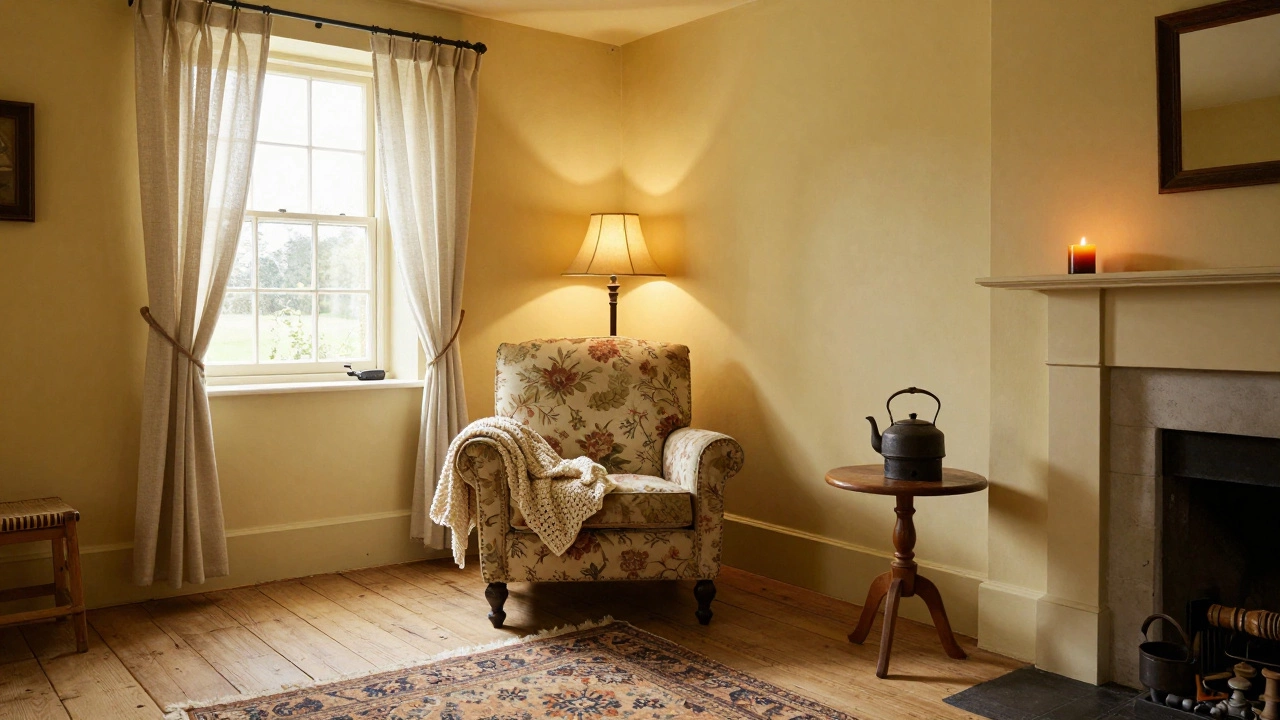
Want your house to feel like a cozy country cottage? It’s not about buying a hundred mismatched quilts or hanging fake flowers everywhere. It’s about creating a sense of warmth, quiet charm, and lived-in comfort-like the place has been loved for generations. You don’t need a thatched roof or a stone chimney to pull it off. What you need is intention. And a few simple, real changes that add up to something deeply comforting.
Start with the Walls
Country cottages don’t have white, sterile walls. They have color that’s been worn soft by sunlight and time. Think buttery yellows, faded sage greens, soft greys, or even a hint of blush pink. These aren’t bold paint chips from a catalog-they’re colors that look like they’ve been mixed by hand, maybe with a bit of chalk or lime. Use matte finishes, not glossy. Gloss reflects light and feels modern. Matte absorbs it, which makes everything feel quieter, calmer.
If you’re not ready to paint all the walls, start with one. An accent wall in a warm, muted tone behind your bed or in the kitchen nook can anchor the whole room. Older homes often had walls painted with limewash, which gives a slightly textured, breathable surface. You can buy limewash paint today-it’s eco-friendly and looks like it’s been there since 1920.
Flooring That Tells a Story
Hardwood floors are great, but they need to look worn, not polished. Look for reclaimed wood with knots, nail holes, and uneven planks. If you’re installing new flooring, choose wide-plank oak or pine with a hand-scraped finish. Avoid shiny finishes. A matte or satin sealant lets the wood breathe and look like it’s been walked on for decades.
Area rugs help too-but not the kind you buy at big-box stores. Look for vintage or handmade wool rugs with faded patterns. Persian or Turkish rugs with soft, earthy tones work well. Even a simple braided rug in cream or gray can feel right if it’s a little frayed at the edges. Don’t worry about matching. Mismatched rugs are part of the charm.
Furniture That Feels Found, Not Bought
Country cottages don’t have matching living room sets. They have pieces that came from different places, different times. A wooden side table from a flea market. A worn armchair reupholstered in floral cotton. A kitchen table that’s been sanded down so many times the grain shows through.
Look for furniture with character: turned legs, carved details, chipped paint that reveals layers underneath. You don’t need to spend a fortune. Visit local thrift stores, estate sales, or online marketplaces like Facebook Marketplace. Look for solid wood pieces-no particleboard. Even if it’s ugly now, a little sanding and a coat of milk paint can turn it into something beautiful.
Keep it simple. Don’t fill every corner. Leave space. A country cottage feels open, not cluttered. One well-loved chair by the window is better than three identical ones in a row.
Textiles That Breathe
Forget synthetic curtains and polyester throws. Country cottages live in natural fibers: linen, cotton, wool, and sometimes even hemp. Curtains should be light, airy, and slightly sheer. White or cream linen curtains that flutter in the breeze are classic. If you want color, go for subtle stripes or small floral prints-not large, loud patterns.
Throw pillows? Mix textures. One in linen, one in knitted wool, one with hand-stitched embroidery. No need to match. In fact, mismatched is better. A crocheted blanket draped over the back of a sofa? Perfect. A quilt made by your grandmother? Even better.
Don’t overdo it. One or two well-placed textiles add warmth. Ten throw pillows on a single couch? That’s a showroom, not a cottage.
Lighting That Glows, Not Shines
Harsh overhead lights kill the cottage vibe. Instead, use layered lighting. Table lamps with fabric shades. Wall sconces with frosted glass. A pendant light over the kitchen island made from wrought iron or aged brass.
Look for fixtures that look old, even if they’re new. Brands like Visual Comfort or Circa Lighting make reproduction pieces that look like they’ve been in a farmhouse for 80 years. LED bulbs with a warm color temperature (2700K) are essential. Avoid anything cooler than 3000K-it feels clinical.
And candles. Always candles. Not the fancy scented ones. Simple, unscented beeswax or soy candles in glass jars. Light them in the evening. Let the flicker soften the room.
The Kitchen: Heart of the Cottage
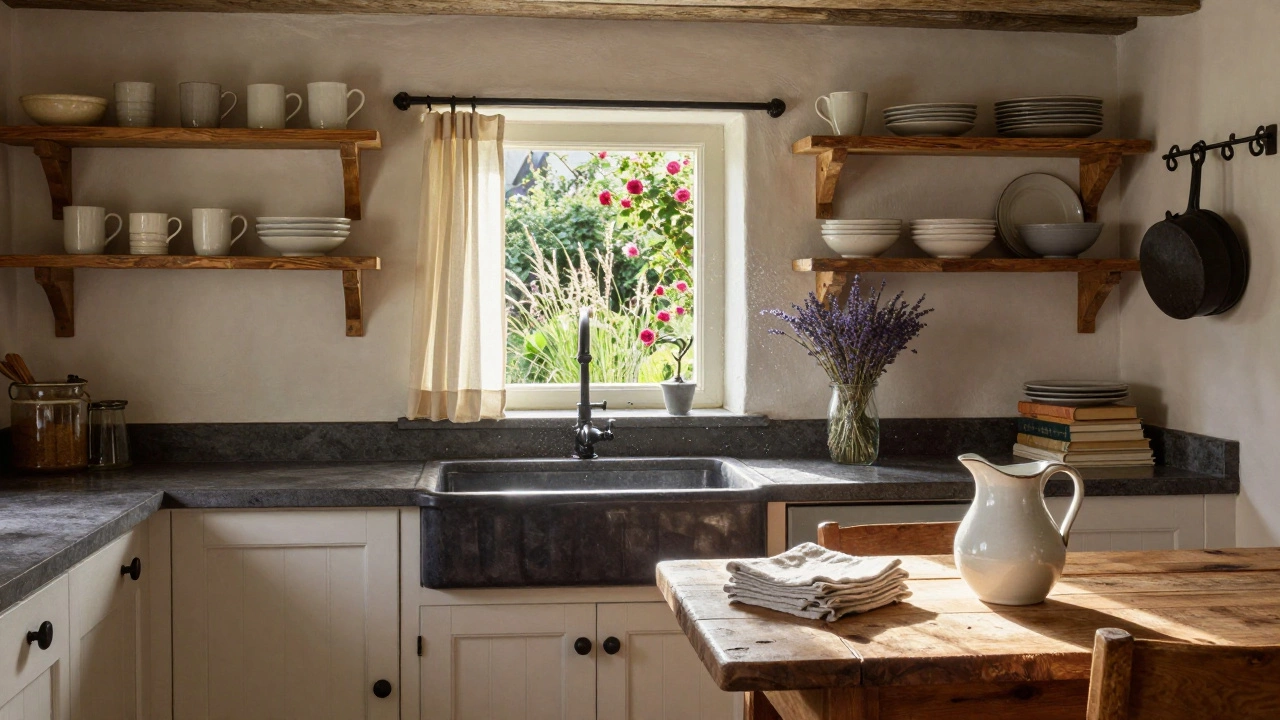
The kitchen is where the cottage soul lives. Open shelving is key. Replace upper cabinets with wooden shelves. Display your favorite dishes-chipped ceramic mugs, hand-thrown bowls, mismatched plates. Don’t hide them. Let them show their age.
Countertops should be simple. Butcher block, soapstone, or even painted wood. Avoid granite and quartz-they look too new. A farmhouse sink is a must. Deep, wide, and made of fireclay or cast iron. It’s the kind of sink you can wash laundry in, or fill with flowers on a summer morning.
Add a wooden table with mismatched chairs. A small sideboard with a porcelain pitcher and a stack of linen napkins. A window above the sink that looks out onto the garden. That’s all you need.
Bring the Outside In
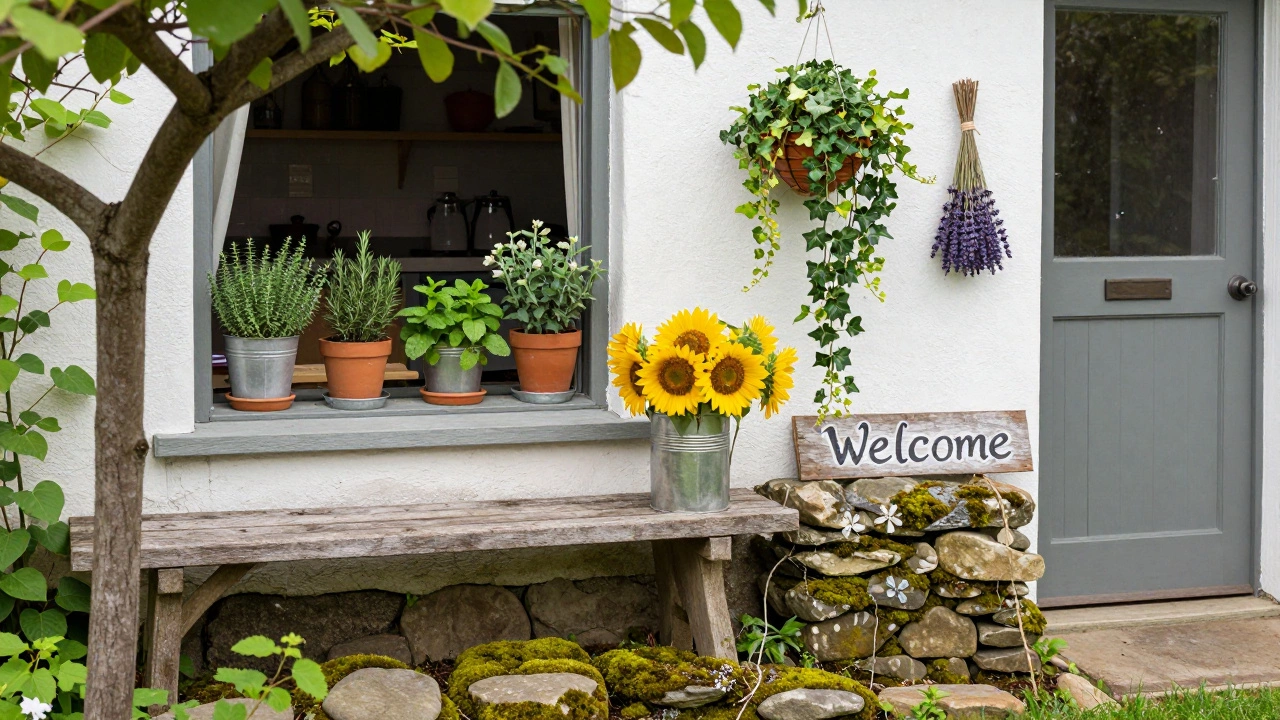
A country cottage doesn’t just look like it belongs to the land-it feels like it grew from it. That means plants. Not just one potted fern. Lots of them. Herbs on the windowsill: thyme, rosemary, mint. A trailing ivy in a hanging basket. A big potted olive tree by the front door.
Flowers in jars. Dried lavender tied with twine. Sunflowers in a tin can. Don’t buy fancy vases. Use mason jars, old teapots, or tin cans painted white. The container doesn’t matter. The life inside does.
If you have a garden, let it be a little wild. Tall grasses, climbing roses, a patch of wildflowers. A wooden bench under a tree. A path of stepping stones, uneven and covered in moss. You don’t need perfection. You need presence.
Small Details That Make the Difference
It’s the little things that turn a house into a cottage.
- A wooden sign over the door that says "Welcome" in hand-painted letters.
- A cast iron kettle on the stove, always ready.
- A basket of wool socks by the fireplace.
- A stack of old books on the nightstand-no Kindle.
- A wooden clock with a ticking sound you can hear from the next room.
- A door that doesn’t quite shut all the way.
These aren’t decorations. They’re habits. They’re signs that someone lives here, not just visits.
Let It Age Gracefully
The biggest mistake people make? Trying to make it look perfect. Country cottages aren’t staged. They’re lived in. A scratch on the table? Leave it. A patch of paint peeling near the window? That’s not a flaw-it’s history.
Let the sun bleach the curtains. Let the rain darken the wood on the porch. Let the cats nap on the rug. Let the kitchen table collect crumbs and coffee rings. That’s not mess. That’s meaning.
Country cottage style isn’t about buying the right things. It’s about letting the right things stay.
Can I make my modern house look like a country cottage?
Absolutely. Modern homes can feel cozy with the right touches. Focus on materials-wood, linen, stone-and soften sharp edges with textiles and lighting. Swap out sleek metal fixtures for brass or iron. Add a farmhouse sink, open shelves, and a few well-placed plants. The structure doesn’t matter; the feeling does.
What’s the difference between farmhouse and country cottage style?
Farmhouse style leans more rustic and functional-think exposed beams, industrial lighting, and bold black accents. Country cottage is softer, quieter, and more romantic. It’s about faded colors, worn fabrics, and gentle imperfections. Farmhouse is bold; cottage is whispering.
Do I need a garden to have a country cottage look?
No, but plants help. If you don’t have outdoor space, bring the garden inside. Use potted herbs, hanging ivy, or dried flower arrangements. A windowsill with three pots of basil and a jar of wildflowers counts. The goal is to feel connected to nature, not to have acres of land.
Is country cottage style expensive?
Not if you do it slowly. Start with what you already own. Paint a wall. Buy one vintage rug. Repurpose an old dresser. Thrift stores, yard sales, and online marketplaces are goldmines. The style thrives on patience, not budgets.
How do I keep it from looking like a theme park?
Avoid anything too perfect. No matching sets. No plastic flowers. No signs that say "Cottage Core". Let things be slightly uneven. Mix old with new. Use real, imperfect objects. The more it feels like it’s been collected over time, the more real it becomes.