Choosing the Most Environmentally Friendly House to Build: A Complete Guide
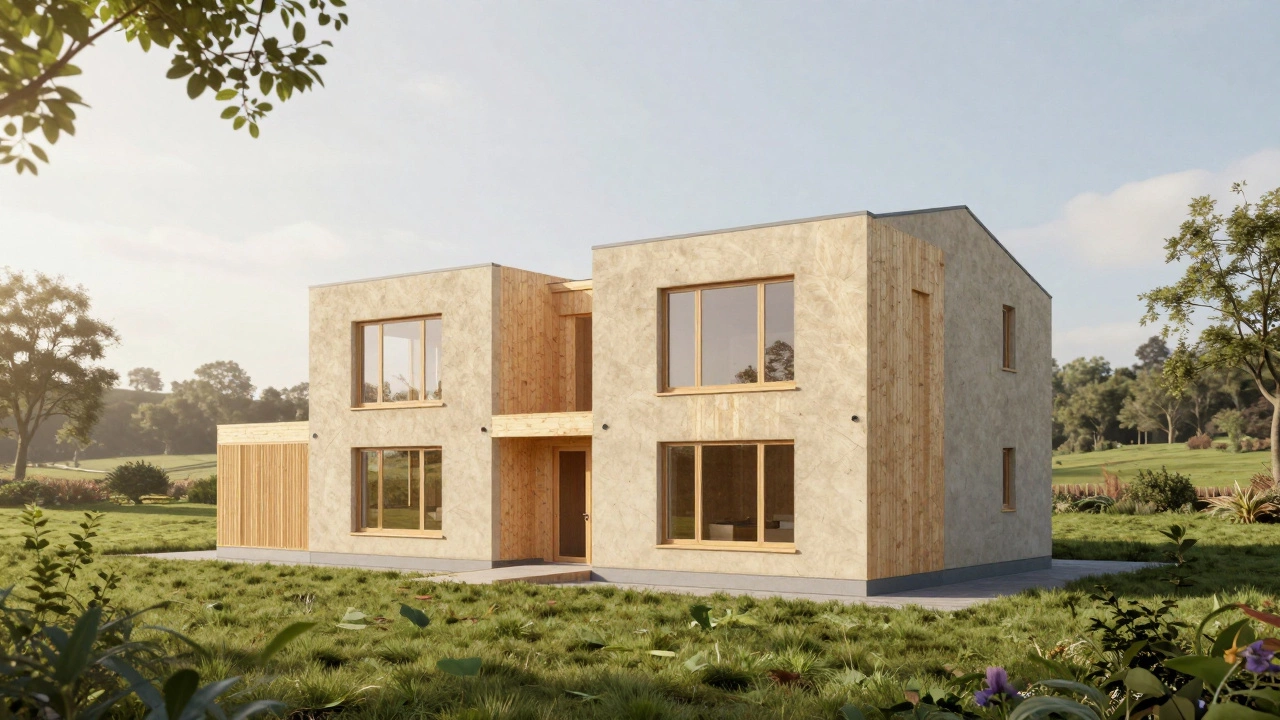
Eco-Home Impact Estimator
Estimated Impact Score
Select your materials and size to see the impact.
The goal isn't just to add a few solar panels to a standard build; it's about rethinking how a structure interacts with the earth. Whether you're planning a small getaway or a forever home, the secret lies in the intersection of material choice, energy physics, and site placement.
Quick Wins for a Greener Build
- Orientation: Face your main windows south (in the northern hemisphere) to soak up free heat from the sun.
- Sizing: Every extra square foot requires more material and more energy to heat. Build only what you actually need.
- Materials: Swap traditional concrete and steel for carbon-sequestering options like timber or hemp.
- Efficiency: Aim for a "tight" building envelope to stop expensive heat from leaking out.
The Gold Standard: Passive House Design
If you want a house that practically runs itself, you look at Passive House is a rigorous voluntary standard for energy efficiency in building, focusing on an airtight envelope and high-thermal performance. This isn't just a style; it's a scientific approach to construction. A Passive House is designed to keep heat inside during winter and outside during summer, reducing the need for active heating and cooling by up to 90% compared to typical builds.
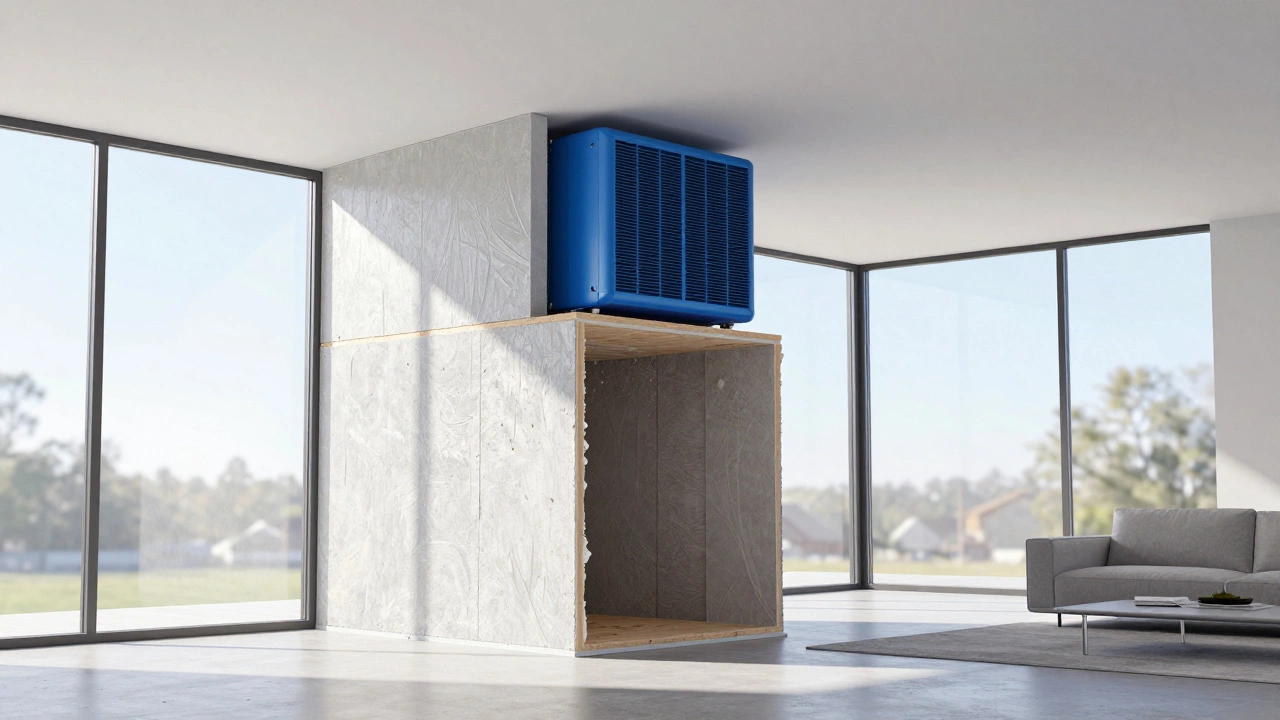
To achieve this, you need a few non-negotiables. First, triple-pane windows are a must. Standard double-panes just don't cut it when you're trying to eliminate drafts. Second, you need thick, continuous insulation-think of it like a high-quality thermos for your living room. Finally, you install a Heat Recovery Ventilator (HRV). Since the house is so airtight, you need a system that brings in fresh air while stripping the heat from the outgoing stale air and transferring it to the incoming stream.
Comparing Sustainable Building Materials
The materials you choose determine the "embodied carbon" of your home-which is just a fancy way of saying how much CO2 was released before you even moved in. Traditional concrete is one of the worst offenders, accounting for roughly 8% of global CO2 emissions. To build a truly green home, you have to look at materials that either have low impact or actually store carbon.
| Material | Carbon Impact | Best Use Case | Durability |
|---|---|---|---|
| Rammed Earth | Very Low | Thermal mass walls | Extremely High |
| Cross-Laminated Timber (CLT) | Carbon Negative | Structure and flooring | High |
| Hempcrete | Carbon Negative | Insulation and walls | Medium-High |
| Recycled Steel | Moderate | Framing/Support | Very High |
If you're building eco-friendly cottages, hempcrete is a fantastic choice. It's a mixture of hemp shiv and lime. Unlike concrete, it's breathable and actually absorbs CO2 from the air as it cures over time. For those in regions with plenty of clay and sand, rammed earth provides incredible thermal mass, meaning the walls soak up heat during the day and release it slowly at night, keeping the interior temperature stable without a thermostat.
Energy Production and Water Management
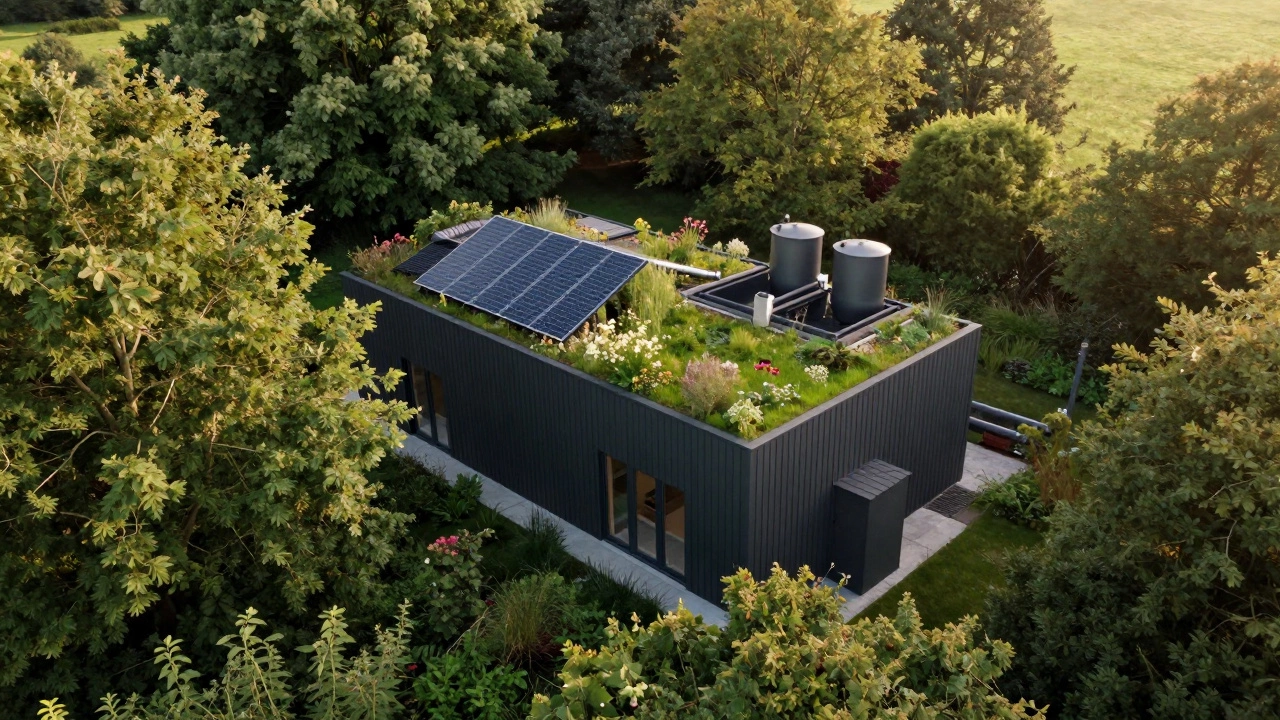
A house that doesn't produce its own energy is only halfway there. The most sustainable homes aim for "Net Zero," meaning they produce as much energy as they consume over a year. This usually starts with Photovoltaic Panels, which convert sunlight directly into electricity. But the real pro move is combining solar with a battery storage system so you aren't relying on the grid during peak hours.
Then there's the water. We often forget that water processing and transport have a huge carbon footprint. A truly green house implements a "closed-loop" system. This starts with rainwater harvesting-collecting runoff from the roof into large cisterns for gardening and flushing toilets. To take it further, look into Greywater Systems. This involves diverting water from your shower and laundry, filtering it through a series of reed beds or sand filters, and reusing it. It's a bit more complex to set up, but it slashes your freshwater demand significantly.
The Role of Site Planning and Biophilia
You can use the most expensive solar panels in the world, but if you build your house in a deep valley with no sun, you've failed. Sustainable building starts with the land. This is called "bioclimatic design." It means studying the wind patterns to block cold winter gusts and using deciduous trees to shade your windows in the summer while letting light through in the winter.
Beyond efficiency, there's the human element: Biophilic Design. This is the practice of integrating nature into the architecture. It's not just about adding a few potted plants; it's about using natural light, ventilation, and organic shapes that reduce stress and improve mental health. When people feel connected to nature inside their homes, they are more likely to care for the environment outside. Think green roofs-not only do they provide insulation and manage stormwater, but they also create habitats for local pollinators.
Common Pitfalls to Avoid
Many people fall into the trap of "greenwashing" their build. They might buy an expensive "eco-friendly" gadget but ignore the basic physics of their home. For example, buying a high-end air purifier for a house with drafty windows is a waste of money. Fix the envelope first, then add the tech.
Another mistake is ignoring the "end-of-life" phase. What happens to your house in 80 years? If you use glues and composite materials that can't be separated, your house will just be a giant pile of landfill. The most sustainable houses are designed for "deconstruction." This means using screws instead of permanent glues and choosing materials that can be composted or recycled back into the industrial loop.
Choosing the Right Path for Your Budget
Not everyone has the budget for a full-blown Passive House with a living roof. The good news is that sustainability is scalable. If you're on a tight budget, focus on the "big three": orientation, insulation, and airtightness. These have the highest return on investment. You can always add solar panels or a greywater system five years down the line, but you can't easily move your house to face the sun or rip open your walls to add more insulation once the drywall is up.
For those building small cottages, the focus should be on minimalism. A smaller footprint inherently means fewer materials and less energy. By combining a small scale with high-performance materials like CLT or hempcrete, you can create a home that is not only environmentally friendly but also incredibly cozy and cost-effective to run.
Is a straw bale house actually durable?
Yes, provided it is plastered correctly. Straw bale construction offers incredible insulation (R-values often exceeding 30), but the bales must be kept dry and sealed with lime or clay plaster to prevent rot and pests. When done right, these houses can last as long as traditional timber frames.
Which is better for the environment: Wood or Steel?
Generally, sustainably sourced wood is much better. Wood sequesters carbon (stores it within the material), whereas steel production is energy-intensive and releases significant CO2. However, recycled steel is a viable alternative if you need the strength of metal for a specific architectural feature.
Do I need a special permit for a greywater system?
In most regions, yes. Because you are dealing with wastewater, local health departments usually require a permit to ensure the water is filtered properly and doesn't contaminate the groundwater. Always check your local building codes before installing a diversion system.
What is the most eco-friendly flooring?
Bamboo and cork are top contenders. Bamboo grows incredibly fast and is highly renewable. Cork is harvested from the bark of the tree without killing it, making it a sustainable choice that also provides natural sound insulation and warmth.
Can a solar-powered house really be off-grid?
Absolutely, but it requires a robust battery bank (like lithium-iron phosphate batteries) to handle the gaps in sunlight. To make this viable, you must first reduce your energy demand through Passive House principles, otherwise, you'll need an impractically large number of panels to survive the winter.