Is Everything Free in All-Inclusive Resorts? What’s Really Covered

All-Inclusive Resort Cost Calculator
Calculate Your Potential Extra Costs
Enter your travel details to see what you might pay beyond the base all-inclusive rate.
Estimated Additional Costs
Recommendation: Based on your selections, you might spend up to more than the base rate.
Tip: Check resort's drink list and dining options before booking to avoid surprises.
You’ve seen the ads: sun-soaked beaches, endless cocktails, gourmet meals, and no bills to worry about. All-inclusive resorts promise total relaxation - but is it really all free? The short answer: no. Not everything. And if you don’t know what’s included before you book, you could end up surprised - or worse, overcharged.
What’s Actually Included in an All-Inclusive Resort?
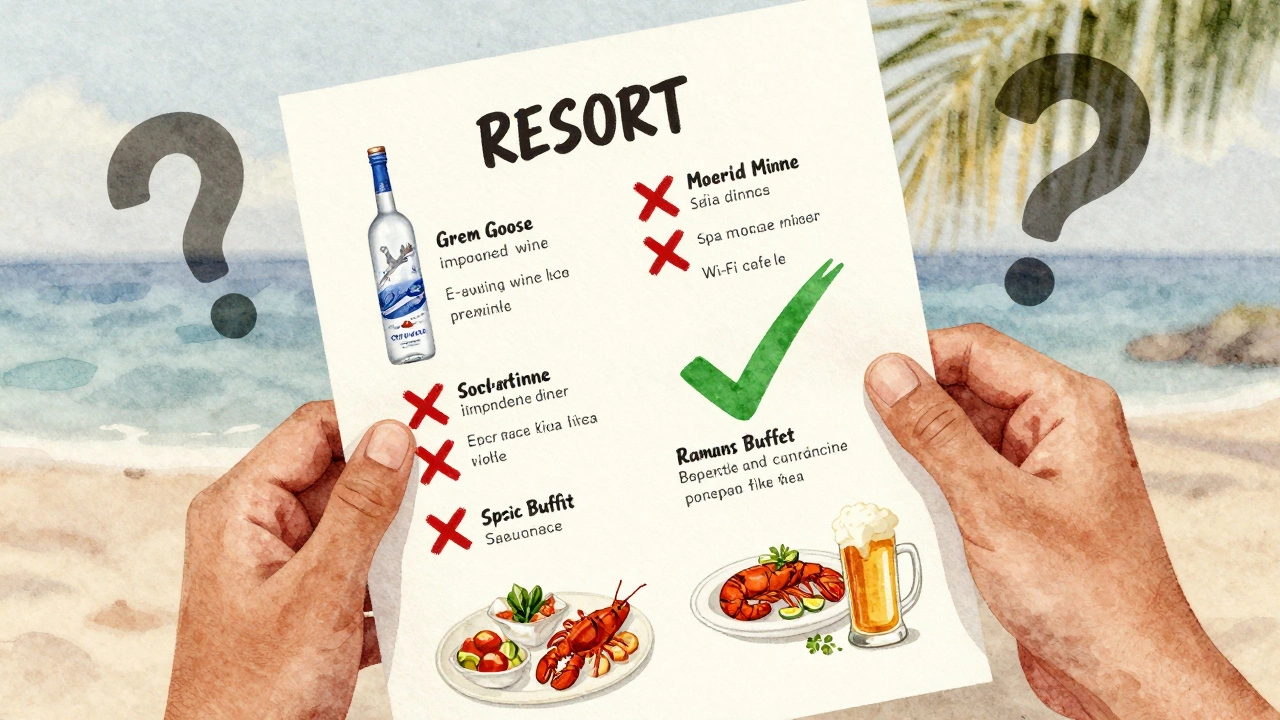
Most all-inclusive resorts cover the basics: your room, three meals a day, snacks, and unlimited drinks - including alcohol. That’s the core package. You’ll typically get breakfast, lunch, and dinner at main dining rooms, with buffets or set menus. Snacks are usually available between meals at lounges or poolside bars. Drinks often include soft drinks, local beer, wine, and house-brand spirits. But here’s the catch: "unlimited" doesn’t always mean "anything you want." Premium brands like Grey Goose vodka, Dom Pérignon champagne, or single-malt scotch are often excluded. These cost extra. Same goes for specialty coffees, imported bottled water, and room service beyond basic menus. Resorts make money on upgrades - and they count on you not reading the fine print.What Costs Extra - Even in an "All-Inclusive" Resort
Just because you paid upfront doesn’t mean you’re free from spending more. Here’s what commonly costs extra:- Specialty restaurants: Many resorts have 2-5 dining options. Only one or two are included. Trying the Italian trattoria, Thai fusion, or steakhouse? That’s an additional $25-$75 per person.
- Premium beverages: Top-shelf liquor, imported beers, and non-local wines are rarely included. A glass of Cabernet Sauvignon from France? That’s $12-$20. A craft cocktail with imported gin? Same deal.
- Room service: Some resorts charge for delivery, even if the food itself is free. Others only include room service during limited hours.
- Spa services: Massages, facials, saunas - all extra. Even basic treatments like a 30-minute back rub can run $80-$150.
- Activities: Snorkeling gear? Included. Scuba diving certification? Not usually. Tennis lessons, yoga classes, or kayaking excursions? Often charged separately.
- Gratuities: Some resorts add a mandatory service fee. Others encourage tipping. Either way, you’re expected to leave something for housekeeping, bartenders, and waitstaff.
- Wi-Fi: Basic internet might be free, but fast, reliable Wi-Fi? That’s a $10-$20 daily fee. Streaming Netflix? Forget it unless you pay up.
One guest in Punta Cana told me she spent $300 extra on her all-inclusive week - just on drinks at the premium bar and one dinner at the lobster restaurant. She thought she was getting "everything free." She wasn’t.
How to Spot the Real All-Inclusive Deals
Not all all-inclusive resorts are created equal. Some are truly inclusive. Others are marketing traps. Here’s how to tell the difference:- Look for "premium all-inclusive" or "ultra all-inclusive" tags: These usually mean top-shelf liquor, unlimited à la carte dining, and no extra fees for most extras. Resorts like Sandals, Secrets, and Beaches often use these labels.
- Check the website’s FAQ section: Reputable resorts list exactly what’s included. If it says "select beverages" or "limited dining options," that’s a red flag.
- Read recent reviews: Look for reviews from the last 3-6 months. Guests will mention hidden fees. Phrases like "I thought it was all-inclusive" or "got charged for water" are common.
- Call the resort directly: Ask: "Is room service free 24/7? Are all alcoholic drinks included? Is there a fee for using the spa facilities?" Write down their answers. If they hesitate, walk away.
For example, a resort in Jamaica might claim "all-inclusive" but only include local rum and beer. A comparable resort in Mexico might include Belvedere vodka, Chilean wine, and unlimited sushi. The price difference? $200-$400 per person for the same week. You’re paying for transparency.
Who Gets the Most Value From All-Inclusive Resorts?
All-inclusive resorts aren’t for everyone. They’re perfect for some, and a waste of money for others.Best for:
- Families who want to avoid constant cash outlays for meals and drinks
- People who drink a lot - especially beer and wine - and don’t care about premium brands
- Travelers who hate planning meals or tracking expenses
- Those who plan to stay mostly on resort property
Not ideal for:
- Foodies who want diverse, high-end dining experiences
- People who drink top-shelf liquor or wine regularly
- Travelers who want to explore local culture, markets, or restaurants off-resort
- Anyone sensitive to service fees or tipping culture
If you’re the type who spends your vacation wandering local towns, eating street food, and trying craft cocktails at hidden bars, an all-inclusive might feel like a gilded cage. But if you want to relax, drink, eat, and nap without thinking about money - and you’re okay with standard fare - they’re hard to beat.
How to Avoid Being Charged for "Free" Things
Here’s a simple checklist before you book:- Confirm which restaurants are included - and which require reservations or extra fees.
- Ask what "house brand" means. Is it local rum? Or just cheap vodka?
- Find out if bottled water is included - or if you’re expected to buy it daily.
- Check if Wi-Fi is free or paid. If it’s paid, how fast is it?
- Ask about gratuity. Is it automatic? Can you opt out?
- Verify if activities like snorkeling, kayaking, or tennis are included - or if you need to rent gear.
One traveler I spoke to in Cancún skipped the resort’s $120 snorkeling tour and rented gear from a local shop for $15. She spent $30 on lunch at a beachside taco stand. Her total extra cost: $45. She had a better experience than the couple who paid $200 for the "included" tour and ate the same food at the resort buffet.

Bottom Line: It’s Not Free - But It Can Be Worth It
All-inclusive resorts aren’t magic. They’re businesses. They offer convenience, predictability, and peace of mind - for a price. The "all-inclusive" label means you’re paying upfront for the basics. It doesn’t mean you’re getting everything.Know what’s included. Know what’s not. And decide if the trade-offs make sense for you. If you’re happy with standard drinks, basic food, and limited dining, you’ll save money and stress. If you want luxury, variety, and freedom - you might be better off booking a hotel with a generous meal credit and exploring on your own.
The real question isn’t "Is everything free?" It’s "Is this the right deal for how I want to spend my vacation?"
Are drinks really unlimited at all-inclusive resorts?
Most resorts offer unlimited soft drinks, local beer, wine, and house-brand spirits. Premium brands like Grey Goose, Macallan, or imported champagne usually cost extra. Always check the drink menu - it’ll list what’s included and what’s not.
Do I have to tip at all-inclusive resorts?
Some resorts include a mandatory service charge in your bill. Others don’t, but tipping is expected. Bartenders, housekeeping, and waitstaff often rely on tips. A general rule: $5-$10 per day total, divided among staff. Always ask the resort’s policy before you go.
Can I get room service for free at all-inclusive resorts?
Some resorts include room service with no extra charge, but only during limited hours - usually breakfast and dinner. Others charge delivery fees or only offer it at certain restaurants. Always confirm before assuming it’s free.
Are spa services included in all-inclusive packages?
No. Spa treatments like massages, facials, and body wraps are almost always extra. Some resorts offer complimentary access to saunas or steam rooms, but actual treatments cost $70-$200. Book in advance - they fill up fast.
Is Wi-Fi free at all-inclusive resorts?
Basic Wi-Fi is often free, but it’s usually slow and limited to common areas. Fast, reliable Wi-Fi in your room - especially for streaming - typically costs $10-$20 per day. Some resorts offer free Wi-Fi only if you book a higher-tier room.
Are kids’ activities really free at all-inclusive resorts?
Yes - most all-inclusive resorts include supervised kids’ clubs, games, and activities at no extra cost. Some even offer babysitting services. But special excursions, like dolphin encounters or private parties, usually cost extra. Always ask what’s included in the kids’ program.
What’s the difference between "all-inclusive" and "premium all-inclusive"?
Premium all-inclusive means higher-end drinks (imported spirits, premium wines), more dining options (including à la carte restaurants without extra fees), and sometimes better room service and Wi-Fi. It usually costs $50-$150 more per night, but saves money if you eat out often or drink premium brands.