What Is the Difference Between a Country Cottage and a Farmhouse?
Cottage or Farmhouse Identifier
Select all features that match the property you're evaluating to determine if it's a country cottage or farmhouse.
Analysis Result
Property Type:
Based on selected features
Select features to see analysis
Think of a country cottage and a farmhouse, and you might picture the same thing: a cozy stone house surrounded by fields, maybe with a thatched roof and a vegetable garden. But if you’ve ever tried to rent one, buy one, or even describe one to a local, you know they’re not the same. The difference isn’t just in the name-it’s in the history, the layout, the purpose, and even the way the walls were built.
Origins: Built for Different Lives
A country cottage wasn’t built to grow food. It was built for people who worked the land, not owned it. In England and parts of Europe, cottages were homes for laborers-shepherds, blacksmiths, gardeners-people who needed shelter close to their jobs but didn’t have the land to farm themselves. They were small, simple, and often rented. Many were made from local stone or cob, with tiny windows to keep out the cold and a single room on the ground floor where the whole family lived, cooked, and slept. A farmhouse, on the other hand, was the center of a working farm. It had to feed a family and house farmhands. It was bigger, sturdier, and built to last. You’d find a large kitchen with a hearth big enough to roast whole pigs, a separate dairy room, maybe even a bakehouse. The farmhouse wasn’t just a place to sleep-it was the operational hub of the land. The barn, stables, and fields all radiated from it.Size and Layout: Space Tells the Story
Most country cottages are under 800 square feet. They’re compact. One or two bedrooms, a small living area, maybe a tiny kitchen. You don’t need much space if you’re not raising livestock or storing grain. The charm comes from low ceilings, uneven floors, and windows that seem too small for the walls they’re set into. Many were built in the 1700s or earlier, using whatever materials were nearby-wood, stone, wattle and daub. Farmhouses? They’re often 1,500 square feet or more. You’ll find multiple bedrooms, a proper dining room, and a large kitchen that doubles as a workspace. Older farmhouses had separate wings: one for the family, one for servants or hired hands. Some even had a summer kitchen outside to keep heat away from the main house during harvest season. The layout is practical, not decorative. Doors open directly to the yard, not the living room. There’s usually a porch or veranda where you can sit and watch the fields.Architecture: Details That Matter
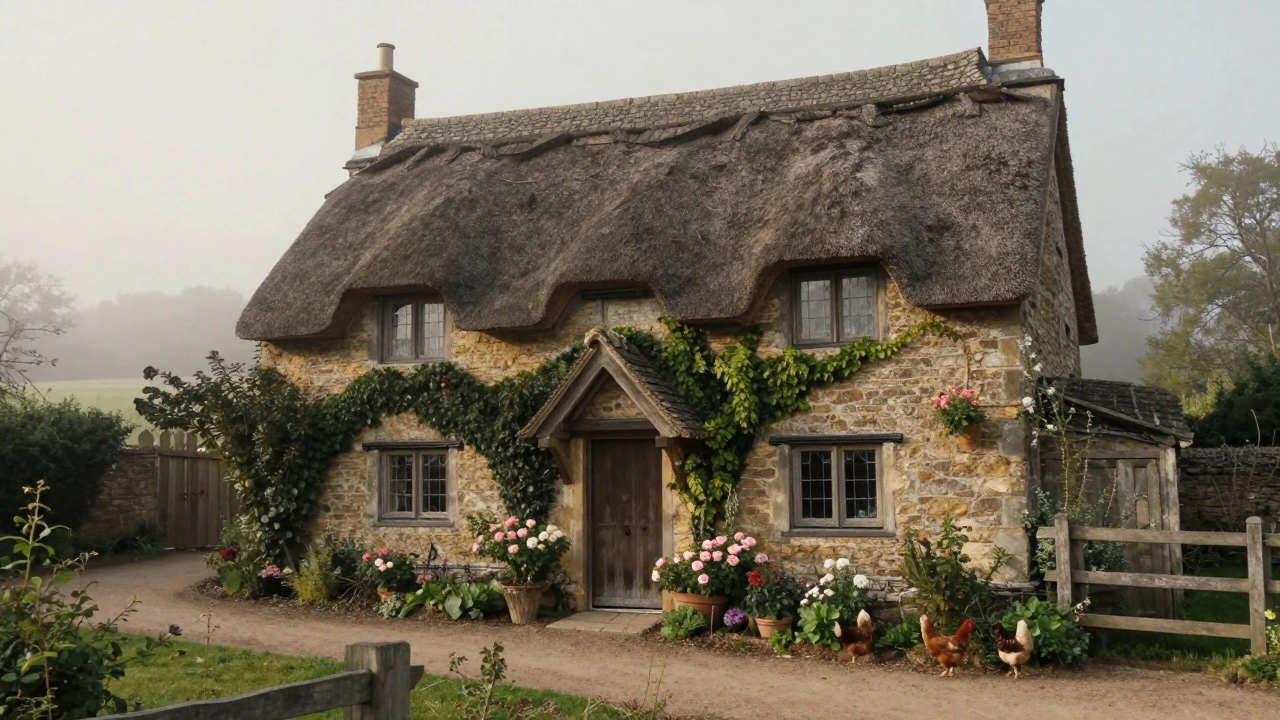
Cottages often have thatched roofs, especially in the UK. They’re low-slung, sometimes half-timbered, with small-paned windows. Chimneys are usually off-center because the fireplaces were added as needed, not planned. Flower boxes hang from windows. Ivy climbs the walls. They look like they grew out of the ground. Farmhouses? They’re more rectangular. Brick or timber frame, with larger windows to let in light for chores. Roofs are steeply pitched to shed rain and snow-often slate or tile. You’ll see a central chimney, sometimes two, because the house needed heat for multiple rooms. The front door often faces the road, not the garden, because the farmyard was the real focus. Many have outbuildings still standing: a smokehouse, a tool shed, a chicken coop.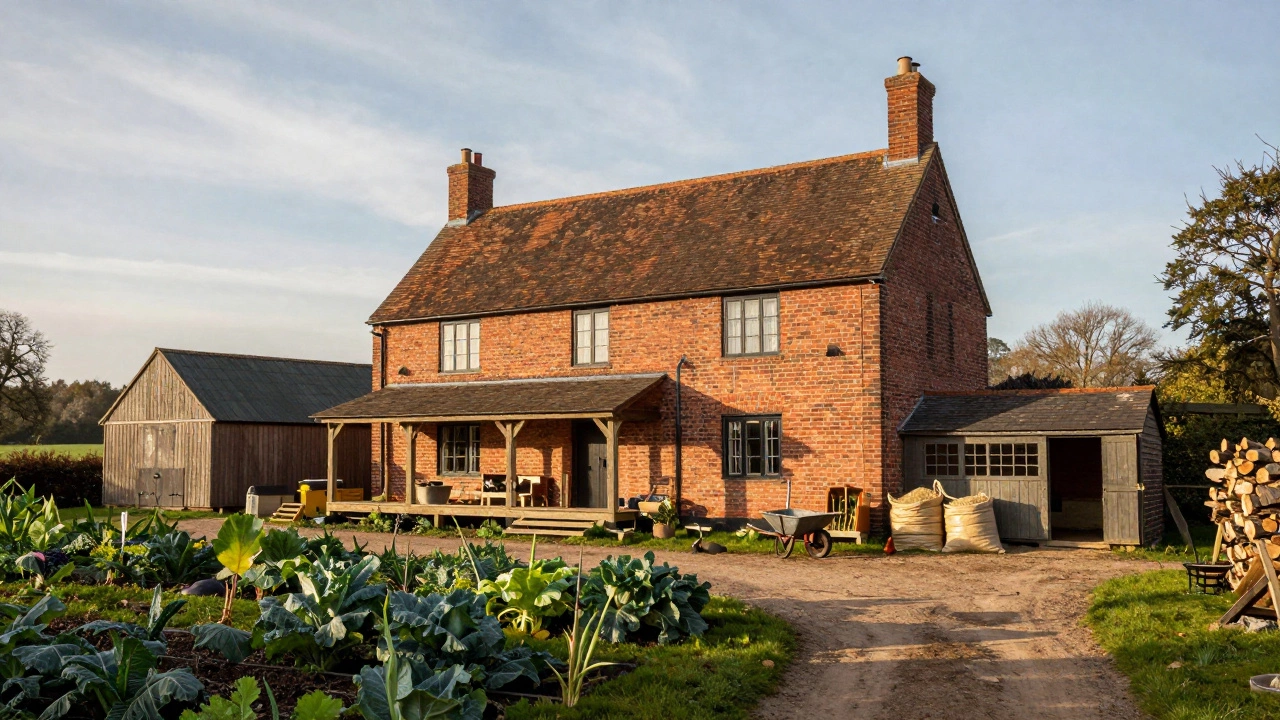
Location and Setting: What’s Around Them
A country cottage might sit alone on a hillside, or tucked into a village with three others. It doesn’t need acres of land. Sometimes it’s just a stone’s throw from a pub or a church. The garden is for herbs, roses, and maybe a few chickens. It’s about privacy, quiet, and charm. A farmhouse sits on land-usually five acres or more. It’s not just a house; it’s the anchor of a working property. You’ll find a barn within sight, maybe a well or a windmill. The land isn’t decorative. It’s productive. You can grow potatoes here, raise pigs, store hay. Even today, if you buy a farmhouse, you’re buying the right to use that land, not just the house on it.Modern Use: Who Lives There Now?
Today, you’ll find both types repurposed. But they attract different people. A country cottage is often bought by someone looking for a weekend escape. A couple wanting a quiet place to read, walk dogs, and disconnect. They care about character-exposed beams, a wood stove, a view of the hills. They don’t want to fix a broken fence or repair a leaking roof. They want to relax. That’s why many are now listed as country cottages on rental sites-small, charming, and low-maintenance. A farmhouse? It’s bought by people who want to live off the land. Homesteaders. Retired farmers. People who want to grow their own food, keep goats, or start a small orchard. They’re not just buying a house-they’re buying a lifestyle that requires work. You’ll see modern kitchens in old farmhouses, but the outbuildings are still in use. A farmhouse in 2025 might have solar panels on the roof and a composting toilet in the barn, but the original grain silo still stands.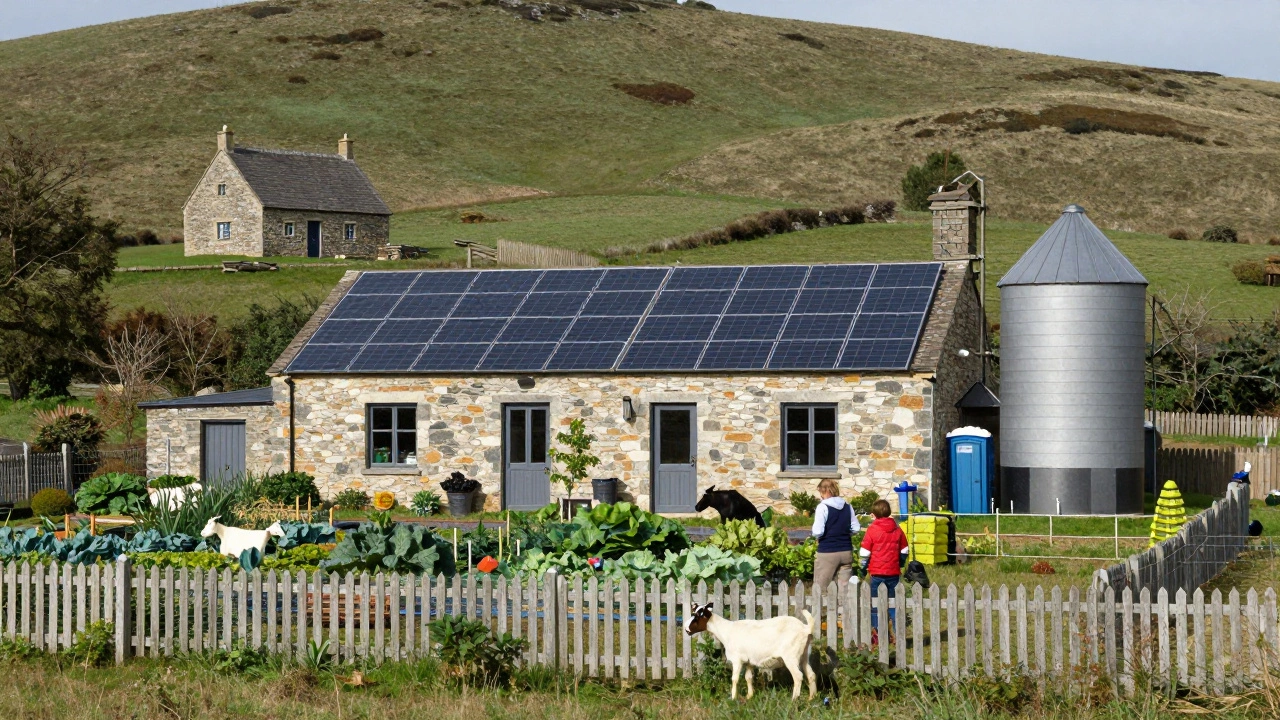
How to Tell Them Apart-A Quick Guide
If you’re looking at a property and trying to figure out if it’s a cottage or a farmhouse, ask yourself:- Is it under 800 sq ft? Likely a cottage.
- Is it over 1,500 sq ft with multiple outbuildings? Probably a farmhouse.
- Does it have a thatched roof? Likely a cottage.
- Is the land over five acres with a working barn? Almost certainly a farmhouse.
- Is the garden full of flowers and herbs? Cottage.
- Is there a vegetable patch, chicken coop, and a woodpile? Farmhouse.
Why It Matters When You’re Buying or Renting
If you’re looking for a quiet retreat with no responsibilities, a cottage is your pick. You won’t need a tractor. You won’t need to fix a fence every spring. You’ll pay less to maintain it. If you want to grow your own food, raise animals, or live more self-sufficiently, a farmhouse is the real deal. But you’ll need the time, the tools, and the patience. The repairs are bigger. The work is constant. The payoff? You’re not just living in the countryside-you’re part of it.Final Thought: It’s Not Just Style-It’s Story
A cottage tells the story of a laborer’s life. A farmhouse tells the story of a family that fed a community. One was meant to be lived in. The other was meant to be lived from. Today, both are treasures. But knowing the difference helps you choose the right one-not just for how it looks, but for how you want to live.Can a country cottage have a barn?
Rarely. A true country cottage is small and meant for a single household, not farming. If it has a barn, it’s likely been expanded or was never a true cottage to begin with. A barn suggests land use for animals or crops, which points to a farmhouse.
Are all farmhouses old?
No. While many were built in the 18th and 19th centuries, modern farmhouses are still being built today-especially in rural areas where people want to live self-sufficiently. The difference is in function, not age. A new house with a barn, vegetable garden, and livestock is still a farmhouse.
Can I turn a farmhouse into a cottage?
You can remodel it to look more like a cottage-add flower boxes, paint it white, remove outbuildings-but you can’t change its core structure or land use. If it sits on 20 acres with a working barn, it’s still a farmhouse. The charm of a cottage is its simplicity; a farmhouse’s charm is its scale and function.
Do cottages always have thatched roofs?
No. Thatched roofs are common in England and parts of Europe, but in North America, most cottages have wooden shingles, metal, or asphalt. The defining feature isn’t the roof-it’s the size, history, and purpose. A small, single-story home with no outbuildings on a quarter-acre is a cottage, no matter the roof.
Is a farmhouse always in the countryside?
Traditionally, yes. But today, you can find farmhouse-style homes in suburbs-called "farmhouse chic"-with wraparound porches and shiplap walls. These aren’t real farmhouses. They’re decorative. A true farmhouse needs land, outbuildings, and a history of agricultural use.