Is Glamping More Expensive Than Camping? Real Costs Compared
Glamping vs. Camping Cost Calculator
This calculator helps you compare the true costs of glamping versus traditional camping based on your specific trip parameters. Remember: glamping often includes amenities like electricity, heating, and bedding that you'd need to purchase separately for camping.
Your Trip Details
Glamping Options
Enter your trip details and click "Calculate Total Cost" to see the comparison.
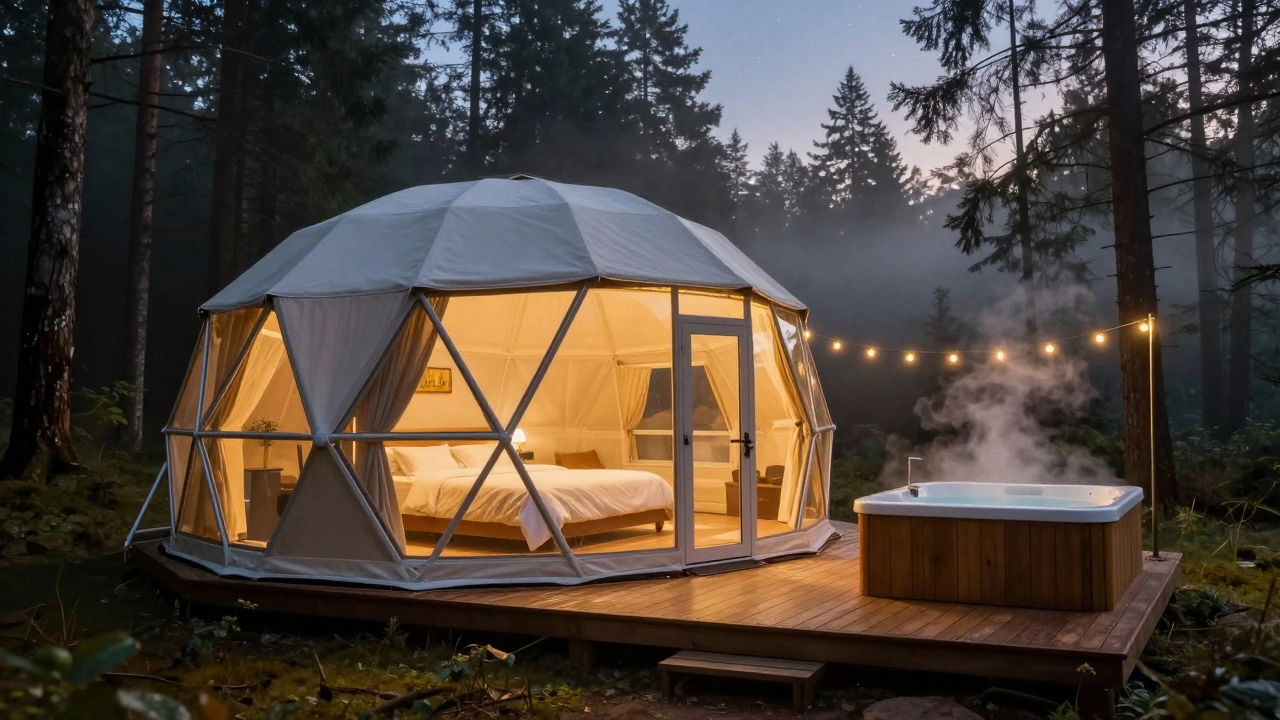
When you hear the word glamping, you might picture a cozy king-sized bed under a starry sky, a mini-fridge full of local cider, and a private hot tub steaming in the forest. But then you check the price - and it’s nearly double what you’d pay for a tent site. So, is glamping really worth the extra cash? Or are you just paying for Instagram-worthy vibes?
The short answer: yes, glamping usually costs more than traditional camping. But not because it’s fancy. It’s because of what’s underneath the tent - the infrastructure, the labor, and the experience. Let’s break down exactly where the money goes, and whether you’re getting value or just paying for aesthetics.
What You Actually Pay For in Glamping
Traditional camping costs are simple: a $20-$40 nightly fee for a campsite, plus gear you already own. Glamping? That’s a different ballgame. A typical glamping unit - think a wooden cabin with a real bed, heating, electricity, and a private bathroom - runs $150-$400 per night in North America, even in off-season.
Here’s what you’re paying for:
- Permanent structures: No pitching tents. These are built with insulated walls, raised floors, and weatherproof roofs. Some even have real windows and screened porches.
- Utilities: Electricity for lights and charging, running water, sometimes even Wi-Fi and heating. These aren’t optional extras - they’re built into the price.
- Maintenance: Someone has to clean the bathroom, restock towels, fix the heater, and mow the lawn around each unit. That’s labor you don’t see, but it’s baked into the rate.
- Location: Most glamping sites are in high-demand natural areas - lakeside, forest edges, mountain views. Land here is expensive, and operators can’t just set up anywhere.
Compare that to a basic campsite: you bring your own tent, your own sleeping bag, your own stove. You use a shared bathroom. You pay for the land, not the setup. That’s why you can camp for under $50 a night in provincial parks across Canada and the U.S.
Where Camping Gets Sneakily Expensive
But here’s the thing - camping isn’t always cheap. If you don’t already own gear, the upfront cost can shock you.
Let’s say you’ve never camped before. You need:
- A tent ($100-$300)
- Sleeping bag ($50-$150)
- Sleeping pad ($30-$100)
- Portable stove and fuel ($60-$120)
- Cookware, lantern, chairs, cooler ($100-$200)
That’s $340-$870 before you even get to the campsite fee. And if you only camp once a year? You’re paying hundreds for gear you use maybe 5 nights total.
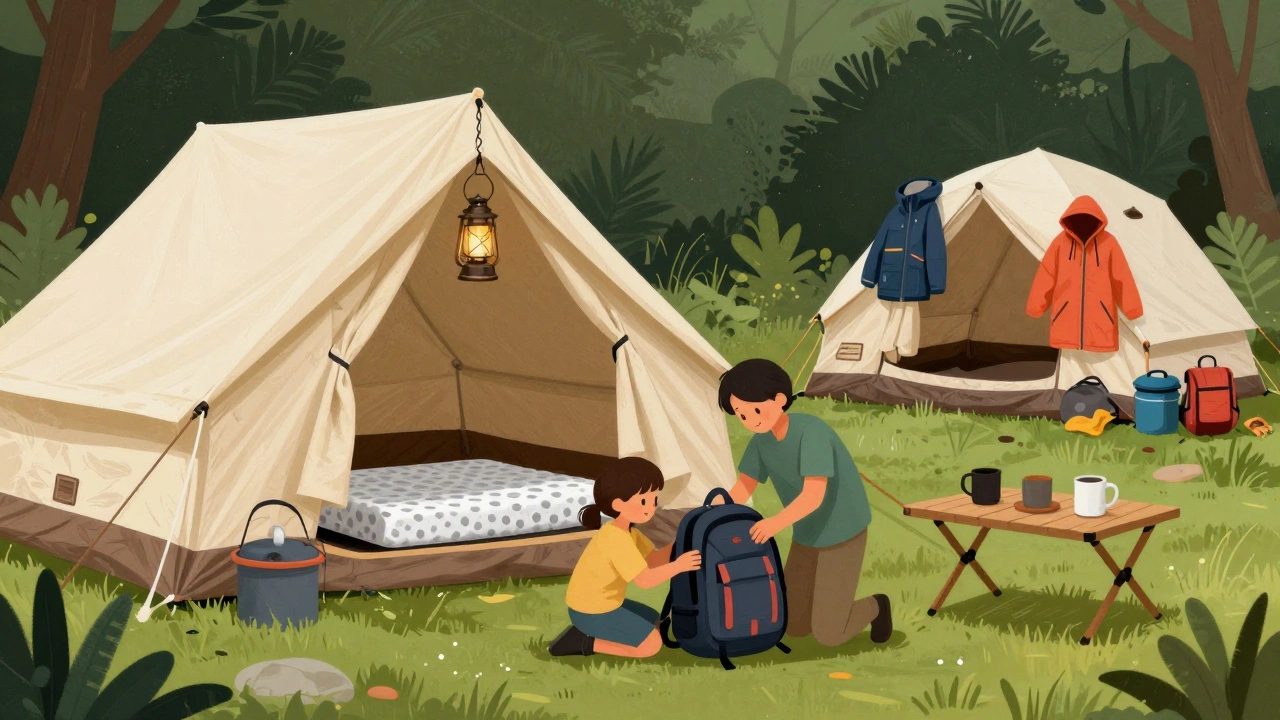
Glamping flips that. You pay $250 for the night, and everything’s included. No setup. No cleanup. No hauling gear in your car. You show up with a backpack and a sense of adventure.
Real Cost Comparison: Glamping vs Camping
Let’s look at a real example - a weekend trip in British Columbia, December 2025.
| Item | Traditional Camping | Glamping |
|---|---|---|
| Campsite Fee | $40 | $0 |
| Glamping Unit | $0 | $400 |
| Tent | $0 (owned) | $0 |
| Sleeping Gear | $0 (owned) | $0 |
| Portable Stove & Fuel | $0 (owned) | $0 |
| Food & Drinks | $80 | $80 |
| Transportation | $60 | $60 |
| Extra Fees (park pass, etc.) | $20 | $20 |
| Total | $200 | $560 |
That’s a $360 difference. But here’s the catch - this assumes you already own all your camping gear. If you don’t? Add $500 to the camping side. Now glamping is only $160 more - and you’re not sleeping on the ground.
Who Benefits Most From Glamping?
Glamping isn’t for everyone. But it’s perfect for certain people:
- New campers - If you’ve never slept outside, glamping removes the intimidation. You get nature without the stress.
- Older travelers or those with mobility issues - No crawling into tents, no sleeping on hard ground. Real beds and indoor bathrooms make a huge difference.
- Couples looking for romance - A heated cabin with fairy lights and a private deck feels like a getaway, not a chore.
- Families with young kids - No midnight tent collapses. No lost socks in the woods. You can even bring a portable crib.
Traditional camping wins for solo adventurers, budget travelers, and people who love the process - setting up camp, building a fire, washing dishes in a creek. If that’s your idea of fun, glamping might feel like a hotel with trees outside.
Are There Cheap Glamping Options?
Yes - but they’re rare. Some parks in Alberta, Ontario, and Washington State offer basic glamping units - think dome tents with a foam mattress and a lantern - for $80-$120 a night. These aren’t luxury. They’re “camping with benefits.”
Look for:
- Provincial or state park glamping sites (not private resorts)
- Off-season deals (November-March in Canada)
- Weekday rates (Monday-Thursday are often 30% cheaper)
- Group discounts (some places lower rates for 3+ units)
On the other hand, a $600-a-night glamping suite with a fireplace, outdoor shower, and chef-prepared breakfast? That’s not camping anymore. That’s a boutique hotel in the woods.
The Real Value: Time, Comfort, and Stress
Price isn’t just about dollars. It’s about what you’re trading.
Glamping saves you:
- Two hours of setup and teardown
- Carrying 40 pounds of gear through mud
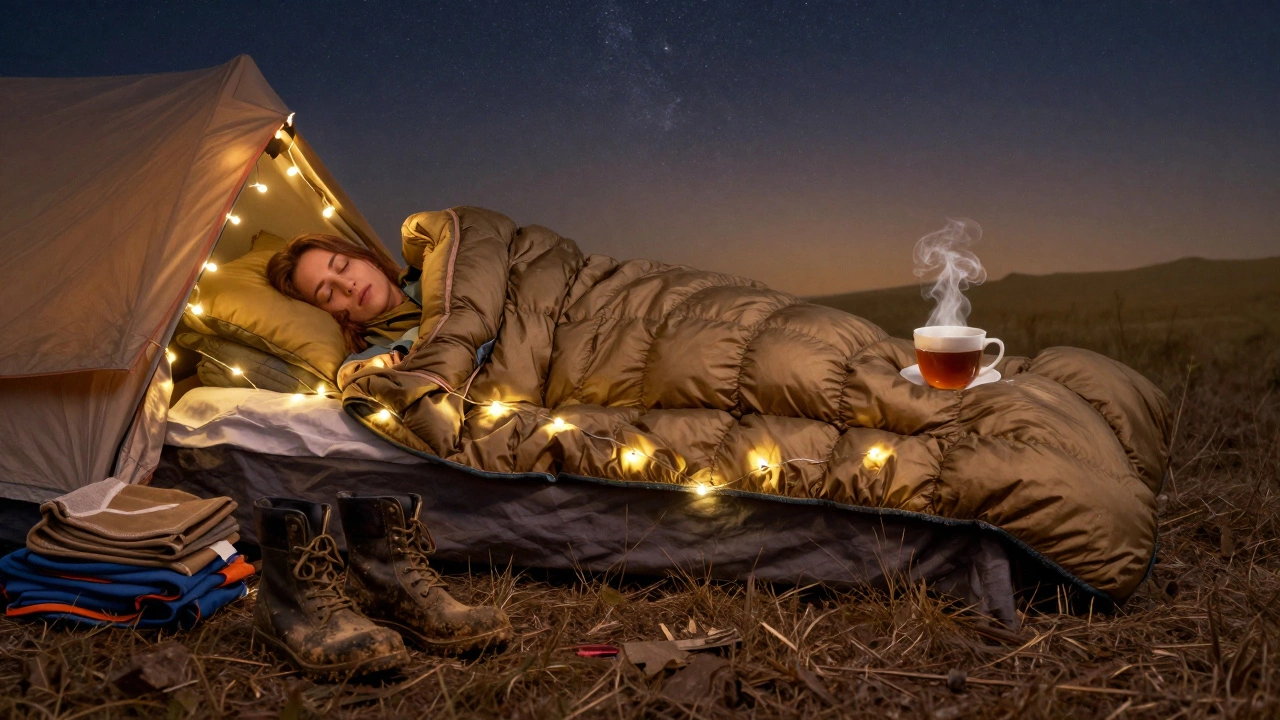
- Worrying about rain soaking your sleeping bag
- Dealing with cold nights because your tent leaked
For many, that’s worth $200. Especially if you only get away once a year. Would you rather spend your weekend relaxing - or fixing a collapsed tent at 11 p.m. while your kids cry?
Glamping doesn’t replace camping. It offers a different experience. One that’s less about survival and more about connection - with nature, with your partner, with your kids. You’re not paying for a tent. You’re paying for peace.
Final Verdict: Is Glamping Worth It?
If you’re comparing glamping to a $30 campsite with your own gear - yes, it’s expensive. But if you’re comparing it to the cost of buying gear, the time you lose setting up, and the stress of bad weather? It’s a bargain.
Glamping is the middle ground between a hotel and a tent. It’s not for the hardcore outdoorsperson. But if you want to sleep under the stars without freezing, without packing, without panic - it’s one of the smartest ways to get into nature.
Try it once. You might find yourself booking again next year - not because you’re fancy, but because you finally slept well.
Is glamping really more expensive than camping?
Yes, glamping usually costs more - often 3 to 5 times more than a basic campsite. But that price includes permanent structures, utilities, cleaning, and amenities like beds and bathrooms. If you don’t own camping gear, the total cost of traditional camping can quickly catch up.
Can you find affordable glamping options?
Absolutely. Look for glamping sites run by provincial or state parks, not luxury resorts. Off-season rates (November to March in Canada), weekday discounts, and basic dome-style units can bring prices down to $80-$120 per night. These still offer real beds and shelter, just without the hot tubs and gourmet breakfasts.
Do I need to buy new gear for glamping?
No. Glamping units come with bedding, lighting, heating, and often kitchenettes. You only need to bring clothes, toiletries, and maybe snacks. No tents, sleeping bags, or stoves required.
Is glamping eco-friendly?
It depends. Many glamping sites use solar power, composting toilets, and recycled materials. But others rely on generators and disposable amenities. Look for certifications like Green Key or LEED, or ask operators about their sustainability practices. Eco-friendly glamping exists - but it’s not automatic.
What’s the difference between glamping and a cabin rental?
Glamping is typically located in natural settings with minimal impact - think tents, domes, or treehouses. Cabin rentals are often more like small houses, sometimes with driveways and full kitchens. Glamping focuses on blending into nature; cabins often feel like a second home in the woods.