What Qualities Are Required of a Business Hotel?
Business Hotel Feature Checklist
This tool helps you evaluate if a hotel meets the essential criteria for business travelers. Based on the article, you need at least 6 of these features to qualify as a true business hotel.
Check features that apply to your hotel
When you're traveling for work, your hotel isn't just a place to sleep-it's your temporary office, meeting room, and recharge station. A business hotel needs to do more than offer a clean bed and free Wi-Fi. It has to support productivity, reduce stress, and make long days feel manageable. So what actually makes a hotel truly work for business travelers?
Reliable, High-Speed Internet Is Non-Negotiable
Nothing kills a business trip faster than a slow or unreliable internet connection. Business travelers don’t just check email-they join Zoom calls with clients across time zones, upload large files, and stream presentations. A hotel that offers Wi-Fi as an afterthought will lose them fast.
Top business hotels provide dedicated business-grade internet, not just consumer-grade access. This means consistent speeds of at least 100 Mbps download, low latency, and no bandwidth caps. Many now offer wired Ethernet ports in rooms for critical meetings. And it’s not just about speed-it’s about reliability. If the network drops during a conference call, the hotel failed its most basic job.
Hotels like those in the Marriott Bonvoy or Hilton Honors business tiers test their networks quarterly. They use third-party tools to monitor performance across all rooms. If you’re booking for a client or team, ask: "Is your Wi-Fi tested and guaranteed for video conferencing?" If they hesitate, keep looking.
Workspaces That Actually Work
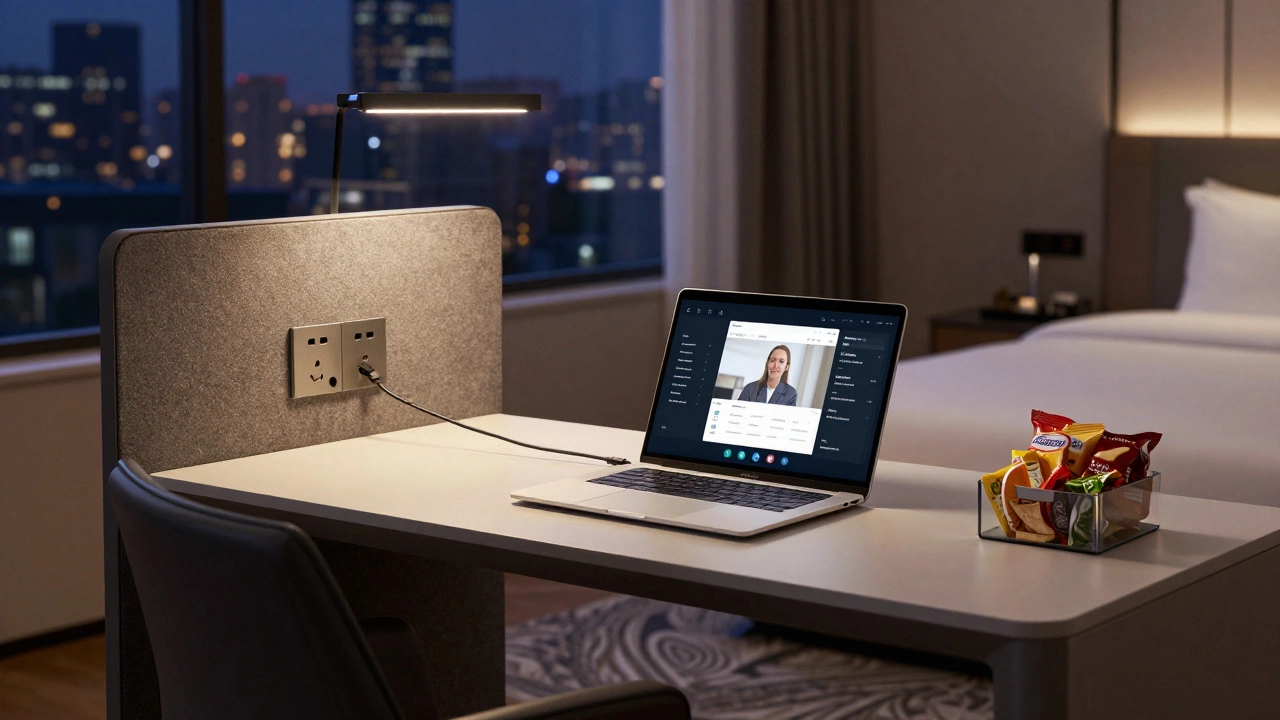
A desk with a chair and a lamp isn’t enough. Business travelers need ergonomic setups that don’t cause back pain after six hours of typing. The best business hotels include adjustable chairs, adequate lighting (natural or high-CRI LED), and enough surface space for a laptop, notebook, and coffee mug without clutter.
Many now offer dedicated workstations with built-in power outlets-USB-C, USB-A, and standard AC-so you don’t have to carry a power strip. Some even have noise-canceling panels or sound-dampening materials around work areas to reduce echo during calls.
And don’t overlook the view. A window with a cityscape or green space helps mental clarity. A view of a parking lot or brick wall doesn’t. Studies from the University of Oregon show that even brief exposure to natural light during work hours reduces fatigue and improves focus by up to 22%.
Quiet Rooms and Soundproofing That Matters
Business travelers often work late or wake up early. A hotel that lets hallway chatter, elevator dings, or noisy neighbors disrupt sleep or calls isn’t just inconvenient-it’s unprofessional.
Effective soundproofing means thick walls, double-glazed windows, and doors with seals that block noise. Many top-tier business hotels use acoustic insulation rated at STC 50 or higher. That’s the same standard used in recording studios. If you can hear the guest next door snoring or talking on their phone, the hotel didn’t invest where it mattered.
Ask about room location when booking. Upper floors away from elevators and ice machines are quieter. Request rooms facing inward, not toward busy streets. Some hotels even let you choose "quiet floor" options during booking.
24/7 Business Services and Support
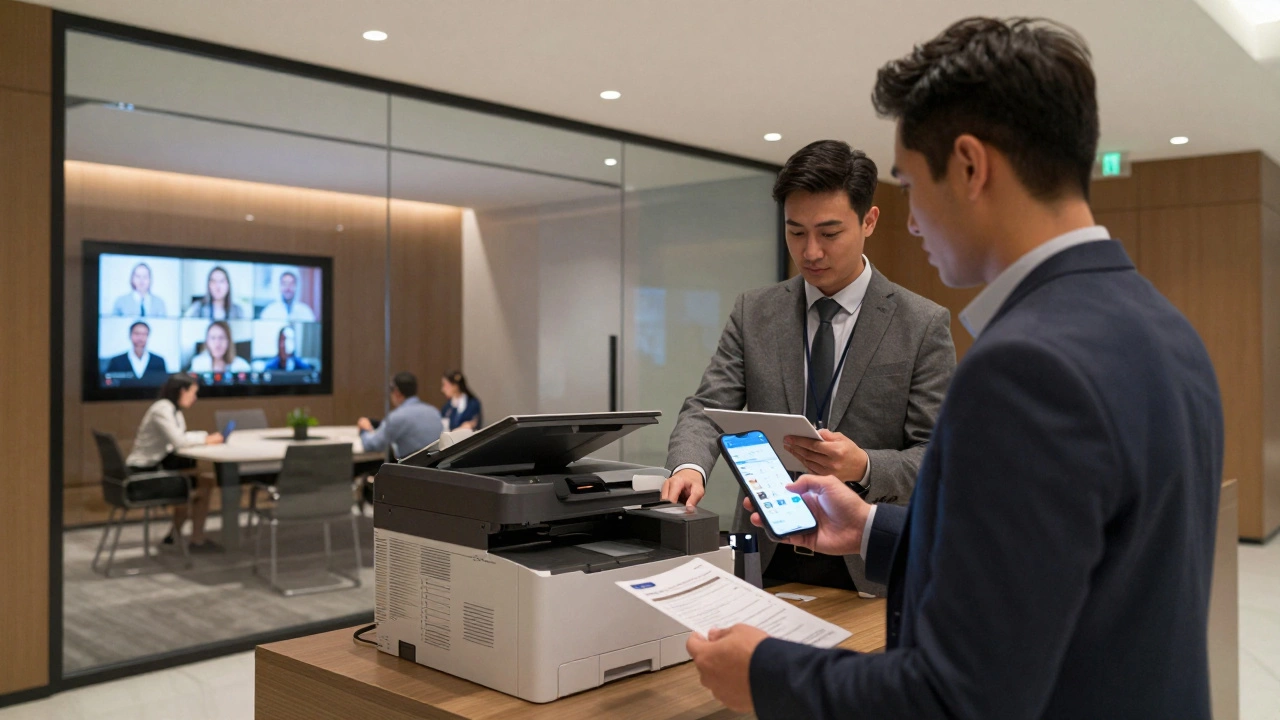
Business trips don’t follow a 9-to-5 schedule. You might need to print a contract at 11 p.m. or scan a signed document at 6 a.m. The best business hotels offer 24-hour business centers with printers, scanners, copiers, and high-speed internet terminals.
But it’s not just about machines-it’s about staff. A front desk agent who knows how to troubleshoot a printer or help you connect to a virtual meeting room is invaluable. Many hotels now train their staff in basic tech support. They know how to reset a router, adjust Zoom settings, or connect a projector to a laptop.
Some even offer concierge tech services: send a technician to your room if your laptop won’t connect, or borrow a portable hotspot if your phone dies mid-meeting. These aren’t luxuries anymore-they’re expectations.
Meeting Spaces That Feel Professional
Even if you’re traveling solo, you might need to meet a client in the hotel. A business hotel should have at least one small, bookable meeting room with a table, chairs, whiteboard, and video conferencing setup. No more awkward coffee shop meetings with bad lighting and loud music.
The best rooms come with built-in cameras, microphones, and screens-no need to lug your own gear. They’re soundproofed, climate-controlled, and stocked with water, coffee, and notepads. Booking one should take less than 90 seconds via the hotel app.
Some chains, like Hyatt and InterContinental, now offer "flex meeting" rooms that can be reserved by the hour. You don’t need to book a full day. That flexibility saves money and fits real business needs.
Convenient Location and Transportation Access
A business hotel should be close to where you need to be: the office, the airport, or the convention center. If you’re flying in, being within 10 minutes of the terminal is a huge advantage. Many top business hotels offer free shuttles to nearby transit hubs.
Walkability matters too. Can you get coffee, lunch, or a pharmacy without calling a ride-share? Business travelers appreciate having a decent restaurant, pharmacy, or grocery within walking distance. A hotel in a sterile business park with no nearby services feels isolating.
Also consider public transit access. In cities like Toronto, Chicago, or London, being near a subway or train station cuts commute time and stress. Hotels that partner with local transit apps or offer discounted passes are winning points.
Healthy Food Options and Late-Night Snacks
Business travelers eat on the go. But they’re not looking for greasy burgers or vending machine chips. They want real food-fresh salads, grilled proteins, whole grains, and clean protein options. Many hotels now partner with local chefs or meal prep services to offer healthy room service menus.
Breakfast isn’t just a perk-it’s a productivity tool. A buffet with eggs, oatmeal, fruit, and yogurt beats sugary pastries every time. Some hotels now offer grab-and-go breakfast packs for early departures: a protein bar, banana, and coffee in a recyclable container.
And don’t forget late-night snacks. If you’re working past midnight, you shouldn’t have to go to a 24-hour convenience store. A well-stocked mini-bar with nuts, fruit, yogurt, and bottled water makes a big difference. Many business hotels now include these in the room rate.
Technology That Just Works
Smart rooms are no longer a novelty-they’re standard. Think voice-controlled lighting, thermostat, and blinds. A simple "Hey Google, turn on the lamp" saves time when your hands are full.
Keyless entry via app is a must. No more fumbling for a plastic keycard in the dark. Mobile check-in and digital keys reduce stress and wait times.
Even small things matter: a TV that can mirror your laptop screen, a charging station built into the nightstand, or a Bluetooth speaker that pairs instantly. These aren’t gimmicks-they’re time-savers.
Consistency Across Locations
If you’re a frequent traveler, you don’t want to relearn how to use the coffee machine or find the Wi-Fi password every time you check in. Top business hotel chains maintain consistent layouts, tech setups, and service standards across all locations.
That means the same room layout, same power outlet positions, same app interface, and same staff training. It’s why loyal business travelers stick with Marriott, Hilton, or IHG-even if they’re slightly more expensive. Predictability reduces cognitive load. You can focus on your work, not your surroundings.
What to Look for When Booking
Here’s a quick checklist before you hit "book":
- Does the hotel guarantee 100+ Mbps Wi-Fi for video calls?
- Is there a dedicated, ergonomic workspace with multiple power outlets?
- Are the rooms soundproofed (STC 50+)?
- Is there a 24-hour business center with printing and tech support?
- Can you book a meeting room by the hour via app?
- Is the location walkable to essentials or near transit?
- Does breakfast include real food-not just pastries and juice?
- Is keyless entry and mobile check-in available?
If you can answer yes to at least six of these, you’ve found a hotel built for business.
Why This Matters Beyond Comfort
A bad hotel doesn’t just make your trip unpleasant-it affects your performance. A 2024 study by the Global Business Travel Association found that business travelers who stayed in hotels with poor work environments reported 37% more stress, 29% lower productivity, and 41% higher likelihood of rescheduling meetings.
For companies, that means lost time, missed deals, and higher travel costs from rebooking or last-minute changes. Investing in the right hotel isn’t about luxury-it’s about risk management.
Business travel is here to stay. The hotels that thrive won’t be the ones with the biggest lobbies or the most chandeliers. They’ll be the ones that understand: a business traveler’s most valuable asset isn’t their suitcase. It’s their focus.
What’s the most important feature in a business hotel?
The most important feature is reliable, high-speed internet that supports video conferencing without drops or lag. Without it, nothing else matters-no matter how nice the bed or how quiet the room.
Do business hotels charge extra for Wi-Fi?
Most major business hotel chains include high-speed Wi-Fi in the room rate. If they charge extra, it’s usually a red flag. Premium brands like Hilton, Marriott, and Hyatt offer complimentary business-grade internet as standard.
Are business hotels more expensive than regular hotels?
They can be, but not always. Business hotels often cost slightly more because they invest in tech, soundproofing, and service. But for frequent travelers, the value is clear: fewer delays, less stress, and better productivity. The extra cost is often offset by time saved and meetings kept.
Should I book directly with the hotel or through a third-party site?
Book directly. Third-party sites often don’t show the full amenities-like free Wi-Fi, meeting room access, or mobile check-in. Booking through the hotel’s app or website ensures you get the full business traveler benefits and can request specific room types or services.
What if I need to host a client in my room?
Ask the front desk about booking a small meeting room. Most business hotels offer private, bookable spaces with AV equipment. Hosting a client in your room can feel unprofessional. A dedicated space shows respect for their time and keeps your personal space private.