Where to Sleep in an Airport: The Ultimate Guide to Lounges, Pods, and Hotels
Airport Sleep Strategy Planner
Tell us about your situation:
Option Name
Avg Cost: $0
Description goes here.
Essential Gear Checklist:
Select your preferences to find the perfect spot to rest.
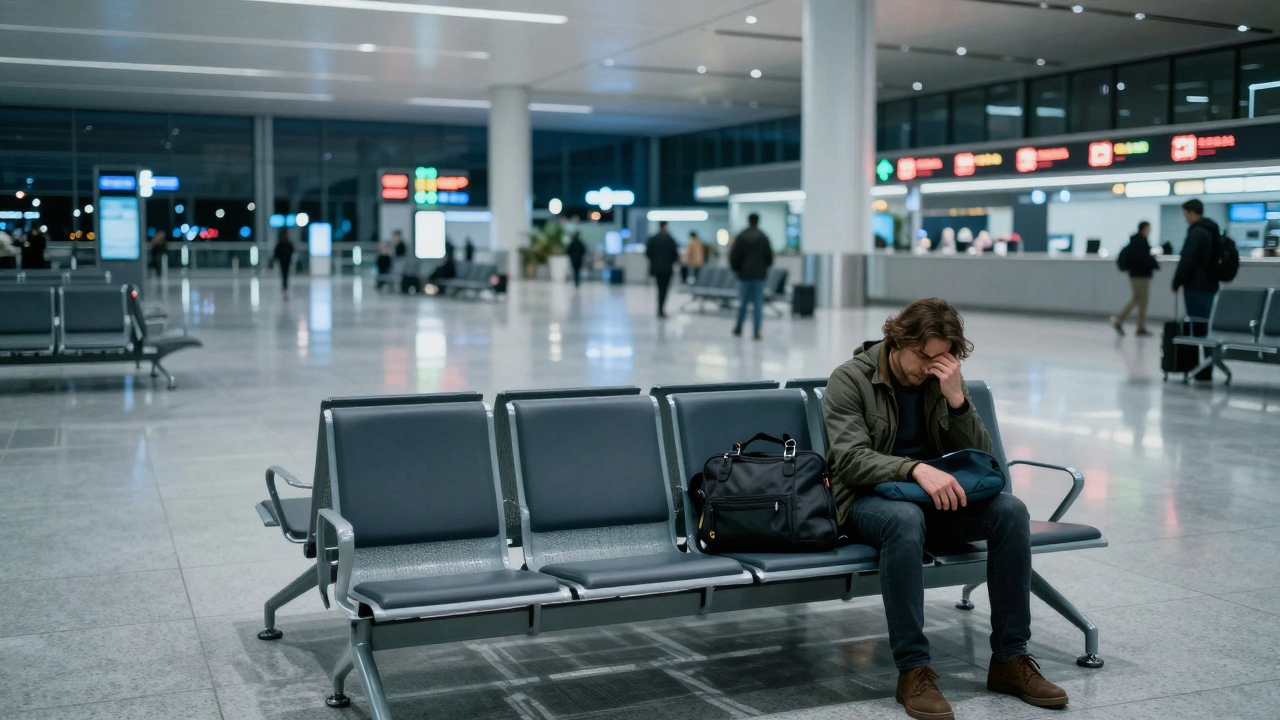
There is nothing quite as disorienting as staring at a departure board while your body screams for eight hours of REM sleep. You have a six-hour layover, the next flight isn't until morning, and every seat in the terminal feels like it’s made of concrete. So, where do you actually go? Do you risk looking suspicious by curling up on a bench near Gate B12? Do you pay $300 for a hotel room you’ll only use for four hours? Or is there a middle ground that doesn’t involve sleeping with one eye open?
Finding a place to rest during a long layover or an early morning red-eye has evolved significantly over the last few years. It used to be a binary choice: endure the discomfort of public seating or splurge on expensive accommodation. Today, the landscape includes everything from high-tech sleeping pods and dedicated quiet zones to affordable transit hotels located right inside the security perimeter. Knowing your options can mean the difference between arriving at your destination refreshed or dragging yourself through customs like a zombie.
The Spectrum of Airport Rest Options
Before you decide where to spend those precious hours, it helps to understand the hierarchy of comfort available in modern airports. Not all terminals are created equal, and not all airports offer the same amenities. Generally, you will encounter four distinct tiers of sleeping arrangements, ranging from free but uncomfortable to paid and luxurious.
At the bottom tier, we have public seating areas. These are standard rows of chairs found throughout the terminal. While they cost nothing, they often lack privacy, come with armrests that prevent lying down, and are subject to random announcements or cleaning crews waking you up at 4 AM. Above that, you find quiet zones or nap pods. Many major hubs now designate specific areas with softer lighting, sound-dampening walls, and sometimes even reclining seats. Then there are transit hotels, which offer actual beds, showers, and private rooms, usually billed by the hour. Finally, at the top, you have premium lounges with shower facilities and daybeds, accessible via credit card perks, airline status, or a daily pass.
Your choice depends entirely on three factors: your budget, how much time you have, and whether you need to stay airside (inside security) or landside (outside security).
Sleeping Airside: Inside Security
If your layover keeps you within the secure area of the airport, your options are limited to what the terminal offers. This is the most common scenario for international connections. Here, the goal is to maximize comfort without leaving the sterile zone.
Can I sleep in my clothes and shoes?
It is possible, but not recommended for more than two hours. Sleeping in shoes restricts blood flow and causes swelling. If you must stay in your clothes, loosen belts and remove socks if possible. Bring a neck pillow to support your head against the hard chair back.
Airport Lounges are private spaces within airports that offer complimentary food, drinks, Wi-Fi, and often shower facilities or daybeds. For many travelers, this is the sweet spot. If you have a Priority Pass, an Amex Platinum card, or elite status with an airline, you likely already have access. Look for lounges that explicitly mention "shower facilities" or "daybeds." The Plaza Premium Lounges, for instance, operate in dozens of airports worldwide and frequently offer reclining chairs or small beds in their premium sections. Even if you don’t get a bed, the ability to take a hot shower and change into fresh clothes can reset your energy levels better than any nap.
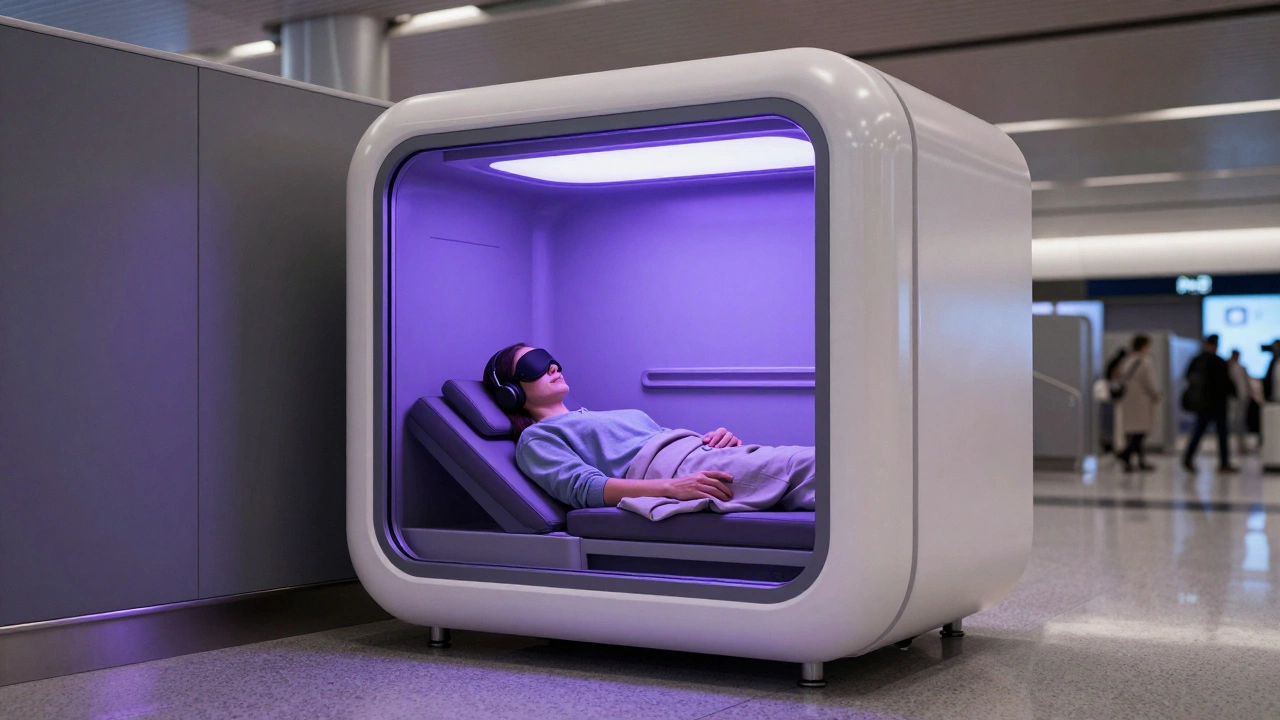
If lounges aren't an option, look for dedicated quiet zones. Some airports, like Singapore Changi and Tokyo Narita, have entire floors or wings designed for rest. These areas feature dimmed lighting, noise-canceling headphones provided at check-in, and comfortable recliners. In Europe, airports like Amsterdam Schiphol have introduced "Snooze Cube" pods. These are compact, enclosed units where you can lie flat, charge your devices, and block out light and sound. They are usually rented by the hour and require a booking in advance.
When scouting for a spot in a general terminal, avoid gates that are currently boarding or deplaning. Instead, look for gates that are far away from active runways or jet bridges. The vibration from aircraft engines can be surprisingly disruptive. Also, steer clear of areas near cleaning stations; janitorial staff often start their shifts early in the morning and may move your belongings or vacuum around you.
Sleeping Landside: Outside Security
If you have a very long layover-say, more than eight hours-or if your connecting flight requires you to exit and re-enter security, going landside opens up a world of possibilities. The biggest advantage here is access to full-service hotels and restaurants.
Transit Hotels are hotels located inside or immediately adjacent to airport terminals, designed for short stays by travelers in transit. Unlike traditional hotels, these properties cater to short durations. You can often book a room for just four hours. Examples include the YOTELPADs found in airports like New York JFK and London Heathrow, or the Aerotel in Berlin. These rooms are small but efficient, featuring bunk-style beds, en-suite bathrooms, and keyless entry. Because they are airside or connected via a secure walkway, you don’t need to worry about missing your flight due to traffic or security lines.
If a transit hotel isn't available, look for budget chains near the terminal. Most major airports have shuttle services that run 24/7 to nearby hotels. Brands like Holiday Inn Express, Courtyard by Marriott, and Hilton Garden Inn often have locations within a five-minute drive of the airport. Check if they offer a "late checkout" or "early check-in" guarantee for airport guests. Sometimes, calling the front desk directly and explaining your situation can yield a discount or a quieter room away from the elevator.
For the ultra-budget traveler, some airports allow overnight stays in the landside waiting areas. However, this is becoming increasingly rare. Airports like San Francisco International (SFO) and Los Angeles International (LAX) have strict policies against loitering after closing hours. Always check the specific airport's website for their "overnight policy" before attempting to sleep in a public lobby outside security.
Comparison of Sleeping Options
| Option | Avg. Cost (USD) | Privacy Level | Showers Available? | Best For |
|---|---|---|---|---|
| Public Seating | $0 | None | No | Short naps (< 2 hrs), zero budget |
| Sleeping Pod/Cube | $30 - $60/hr | High | Sometimes | Quiet, focused rest, tech users |
| Airport Lounge | $50 - $100/day | Medium | Yes (in many) | Business travelers, cardholders |
| Transit Hotel | $80 - $150/4hrs | High | Yes | Long layovers, deep sleep needs |
| Nearby Budget Hotel | $100 - $200/night | High | Yes | Overnight stays, families |
Essential Gear for Airport Sleeping
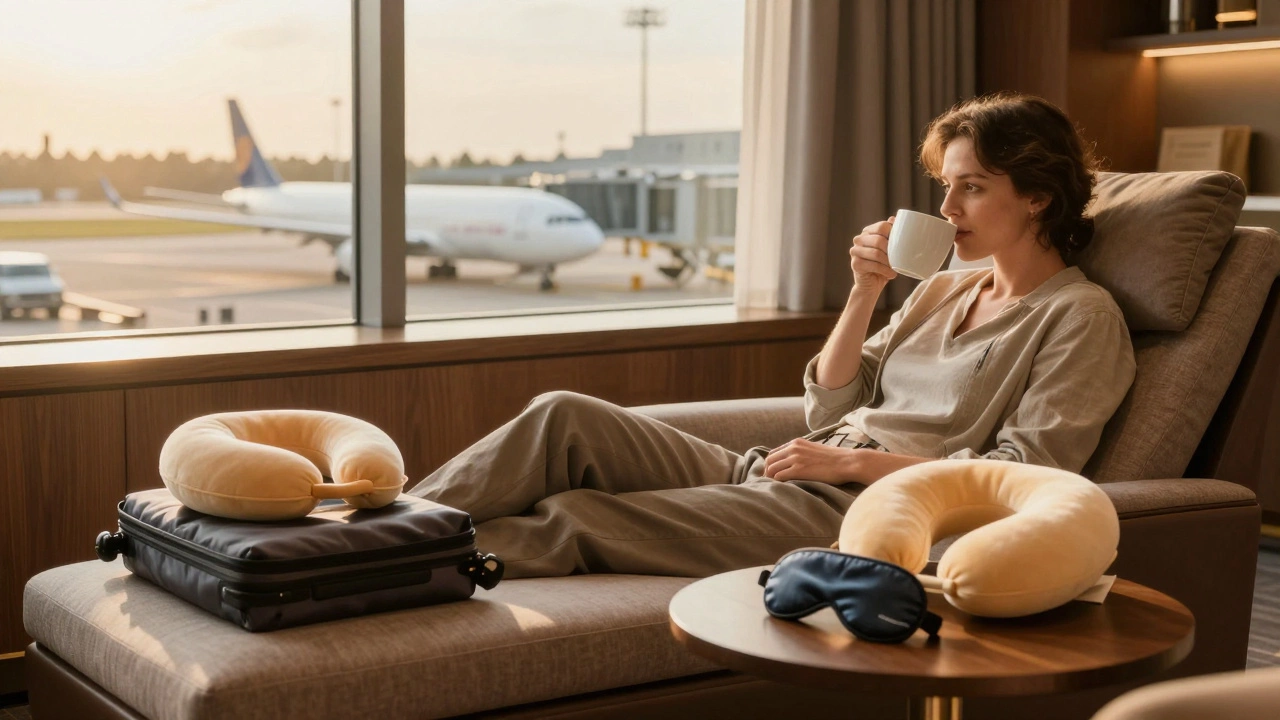
Even the best airport seat won't feel like a king-sized mattress. Your comfort largely depends on what you bring. Packing a lightweight "sleep kit" in your carry-on can transform a miserable experience into a manageable one.
- Neck Pillow: Opt for memory foam rather than inflatable ones. Inflatable pillows leak air and provide poor support. A contoured shape helps keep your head from bobbing forward.
- Eye Mask: Airports are bright places. LED signs, cleaning carts, and early morning sunlight can ruin your sleep cycle. A silk or contoured eye mask blocks 100% of light.
- Earplugs or Noise-Canceling Headphones: Ambient noise in terminals ranges from 60 to 80 decibels. Foam earplugs are cheap and effective, but active noise-canceling headphones are worth the investment if you travel frequently. Play white noise or brown noise to mask sudden announcements.
- Light Jacket or Blanket: Airports are notoriously cold to save on energy costs. Temperatures can drop below 60°F (15°C) at night. A fleece jacket or a large scarf doubles as a blanket.
- Luggage Lock: If you’re sleeping in a public area, lock your bag. Better yet, strap your bag to your leg or use it as a pillow. Never leave your valuables unattended.
Safety and Etiquette Tips
Sleeping in public spaces requires a heightened awareness of your surroundings. First, always trust your instincts. If an area feels unsafe or too isolated, move to a busier section near customer service desks or police stations. Most major airports have 24/7 security patrols.
Be mindful of other travelers. Keep your voice down when talking on the phone, and don’t spread your belongings across multiple seats unless you’re sure no one else needs them. If someone asks to sit nearby, be polite but firm about your space. A simple, "I’m resting here, please excuse me," usually suffices.
Set multiple alarms. It is incredibly easy to oversleep in a dark, quiet pod or lounge. Set one alarm on your phone, another on your watch, and ask a travel companion to wake you up if you have one. Missing a flight because you were too comfortable is a costly mistake.
Top Airports for Sleepers
Not all airports are friendly to overnight travelers. Some actively discourage it, while others have embraced it as part of their service model. If you have control over your connection points, consider routing through airports known for their rest facilities.
Singapore Changi (SIN) is widely regarded as the best airport in the world for sleeping. It features a free slumber deck, a butterfly garden, and multiple luxury hotels inside the terminal. Tokyo Narita (NRT) offers a "Spa & Wellness Center" and numerous capsule hotels. Frankfurt Airport (FRA) has the Aerotel, which allows you to sleep without ever leaving the secure area. In North America, New York JFK has made strides with its YOTEL and lounge expansions, though it remains less accommodating than its Asian counterparts.
Avoid airports like Dallas/Fort Worth (DFW) or Phoenix Sky Harbor (PHX) for overnight stays unless you have booked a hotel. These terminals close down completely at night, removing seating and turning off lights, making them inhospitable for casual sleepers.
Final Thoughts on Layover Logistics
Deciding where to sleep in an airport is about balancing cost, comfort, and convenience. If you have a credit card that grants lounge access, use it. It’s the easiest way to get a shower and a quiet place to recharge. If you’re on a tight budget, invest in good earplugs and an eye mask, and scout for a quiet gate away from the action. For long layovers, a transit hotel or a nearby budget chain is worth the expense for the sake of your health and sanity.
Remember, the goal isn’t just to survive the layover-it’s to arrive at your final destination ready to engage with your trip. Whether that’s a business meeting or a vacation, starting rested makes all the difference. Plan ahead, pack smart, and don’t be afraid to ask airport staff for recommendations on the best spots to rest.
Is it safe to sleep in an airport overnight?
Generally, yes. Major international airports are heavily monitored with CCTV and security patrols. However, petty theft can occur. Always keep your luggage with you, use locks, and choose well-lit, populated areas near information desks or police stations.
Do I need to book airport sleeping pods in advance?
It is highly recommended. Popular airports like Singapore Changi and Tokyo Haneda see high demand for their pods and capsules, especially during peak travel seasons. Booking online ensures availability and often provides a discount compared to walk-in rates.
Can I take a shower in an airport lounge?
Many premium lounges, such as Plaza Premium, Lufthansa Senator, and British Airways Galleries, offer shower facilities. However, not all lounges have them. Check the specific lounge amenities on websites like LoungeBuddy or your credit card provider before assuming access.
What is the cheapest way to sleep in an airport?
The cheapest option is sleeping on public seating for free. To improve this, bring a travel blanket and earplugs. If you need more comfort, look for 24-hour cafes or fast-food restaurants where you can buy a small drink and sit for several hours. Some airports also offer discounted "nap rooms" for under $20 per hour.
Will airport staff kick me out if I sleep?
It depends on the airport's policy. Airports like Frankfurt and Paris CDG are generally tolerant of overnight passengers. Others, like Dallas DFW, may ask you to leave if you appear to be loitering without a ticket. Always have your boarding pass visible and be polite if approached by security.