What Is an Airport Hotel? The Complete Guide to Stays Near Terminals
Airport Hotel Needs & Cost Estimator
Your Recommendation
You’ve got a red-eye flight at 5:00 AM. Your connecting layover is six hours long. Or maybe you’re just tired of fighting rush-hour traffic to get to the terminal. In these moments, the term airport hotel pops up in your search results, but what does it actually mean? Is it just any place close to the runway, or is there more to it?
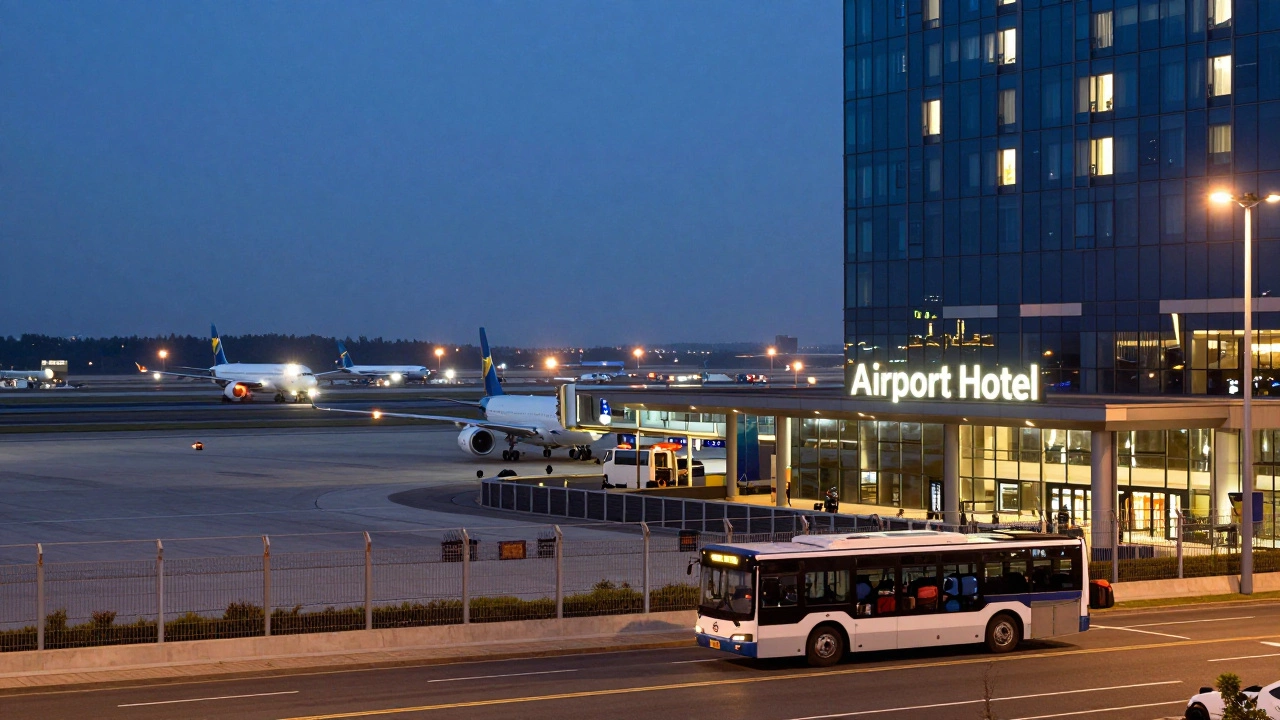
An airport hotel is a lodging facility located within immediate proximity to an airport-usually less than two miles away-that offers specialized services for travelers, such as 24-hour shuttles, early check-in, and late checkout. Unlike a standard city hotel, its entire operation revolves around the unpredictable schedules of air travel.
If you’ve ever booked one on short notice, you know they can be a lifesaver. But if you don’t know what to expect, they can also be a source of stress. Let’s break down exactly what defines this type of accommodation, who it’s really for, and how to pick the right one without wasting money or sleep.
The Defining Features of an Airport Hotel
Not every hotel near an airport qualifies as an "airport hotel." There are specific operational traits that separate them from regular suburban motels.
First, there’s the location. True airport hotels are typically situated within a mile of the terminals. Many are connected directly to the airport via covered walkways, skybridges, or monorail systems. This means you never have to step outside into rain or snow to get to your room.
Second, the timing is different. Standard hotels usually check you in at 3:00 PM and out by 11:00 AM. Airport hotels operate on aviation time. They offer 24-hour front desks because flights land and depart all night. You might arrive at 3:00 AM and need a key immediately, or you might need to store your luggage until your 8:00 PM departure.
Third, transportation is built-in. Most airport hotels provide complimentary shuttle buses that run every 15-30 minutes between the terminal and the property. These shuttles often stop at multiple hotels along a designated route, so you need to know which zone your hotel falls into.
Finally, the amenities cater to transit. You’ll find soundproofed windows to block engine noise, blackout curtains for sleeping during the day, and often express laundry services for business travelers who need a fresh shirt before a morning meeting.
Who Actually Needs an Airport Hotel?
You might think only people with crazy early flights need these places. But the reality is broader. Here are the four main groups who benefit most:
- The Early Bird: If your flight leaves before 7:00 AM, staying nearby saves you from waking up at 3:00 AM and dealing with highway traffic. It’s cheaper than paying for parking at the terminal for 24 hours too.
- The Layover Traveler: If you have a connection of four hours or more, especially internationally, an airport hotel lets you shower, change clothes, and relax in a quiet room instead of sitting on a hard chair in the terminal.
- The Business Commuter: Corporate travelers often book airport hotels for same-day meetings. It minimizes commute time and maximizes work hours. Many offer high-speed Wi-Fi and business centers.
- The Delayed Passenger: Weather cancellations happen. If your flight is bumped to tomorrow, an airport hotel provides a safe, convenient place to sleep without having to drive across town.
If none of these apply to you, you might be better off saving money by staying further away in the city center.
Airport Hotels vs. City Hotels: The Trade-Offs
Choosing where to stay involves weighing convenience against experience. Here is how airport hotels stack up against typical city accommodations.
| Feature | Airport Hotel | City Hotel |
|---|---|---|
| Location | Within 2 miles of terminal | Downtown or tourist districts |
| Check-in/Out | Flexible (often 24/7) | Standard (3 PM / 11 AM) |
| Transportation | Free shuttle bus | Taxi, rideshare, or public transit |
| Ambiance | Functional, quiet, utilitarian | Lively, cultural, scenic |
| Parking | Often included or cheap | Expensive ($30-$50/day) |
| Best For | Transit, early flights, delays | Leisure, sightseeing, nightlife |
The biggest drawback of airport hotels is the lack of character. They are designed for efficiency, not enjoyment. You won’t find boutique decor or rooftop bars overlooking historic landmarks. If you want to explore the city, an airport hotel puts you in a bubble.

Types of Airport Accommodations
Not all airport stays look the same. Depending on the airport size and your budget, you’ll encounter three main types.
Terminal-Connected Hotels are hotels physically linked to the airport terminal via enclosed walkways or elevators. These are the gold standard for convenience. You can walk from security to your bed without leaving the secure area (in some cases). Examples include the Hilton Chicago O’Hare and the Hyatt Regency Denver. They are usually more expensive but save the most time.
Shuttle Hotels are properties located within a few miles of the airport that rely on free bus service for transport. These are the most common. They offer good value and decent amenities. The downside is waiting for the shuttle. During peak times, buses can be full, adding 15-20 minutes to your trip.
Transit Hotels are budget-friendly accommodations located inside or adjacent to the terminal, designed for short stays of 6-24 hours. Popular in Europe and Asia (like YOTEL in London Heathrow), these rooms are small but efficient. You pay by the hour or for a half-day. They are perfect for layovers but not for overnight stays requiring space.
How to Choose the Right One
Don’t just pick the cheapest option on Google Maps. A bad choice can ruin your trip. Follow this checklist:
- Check the Shuttle Route: Look up the airport’s official shuttle map. Some hotels are “Zone A” and others are “Zone B.” If your hotel is Zone C, the bus might take 40 minutes each way. Stick to zones closest to your terminal.
- Verify Noise Levels: Read recent reviews specifically mentioning “noise,” “engine hum,” or “sleep quality.” Rooms facing the runway will be louder. Ask for a room on the opposite side of the building when booking.
- Confirm 24-Hour Access: If you’re arriving late, ensure the lobby and breakfast area are open. Some smaller properties lock up after midnight, meaning you’d have to wait outside for the manager.
- Look for Free Parking: If you’re driving to the airport, many airport hotels include free self-parking. City hotels charge premium rates. This can save you $100+ over a week-long trip.
- Wi-Fi Speed: For remote workers, test the Wi-Fi reputation. Airport areas often have congested networks. Look for hotels advertising “high-speed” or “business-grade” internet.

Common Pitfalls to Avoid
I’ve seen travelers make the same mistakes repeatedly. Here is how to avoid them.
The “Nearby” Trap: Booking sites sometimes label hotels 5-10 miles away as “near the airport.” That’s a 20-minute drive in good traffic. Always measure the distance in miles, not just read the description. Under 2 miles is ideal.
Ignoring Security Wait Times: If you book a terminal-connected hotel, remember you still have to go through TSA security to reach your gate. Factor in at least 60-90 minutes before your flight, even if your room is steps away.
Overlooking Breakfast Hours: Airport hotels often serve breakfast starting at 5:00 AM. If you’re flying at 6:00 AM, you need to eat fast. Check if they offer grab-and-go options like pastries and coffee, rather than just a sit-down buffet that requires reservations.
Assuming All Shuttles Are Free: While most are, some luxury brands or distant properties charge a fee per person. Always confirm the cost before booking.
When to Skip the Airport Hotel
Sometimes, an airport hotel isn’t the smartest move. If you have a layover longer than 12 hours and want to see the city, stay downtown. Use the train or metro to get to the airport-it’s often faster than waiting for a shuttle bus. Also, if you’re traveling with young children who need space to run around, a city hotel with a pool or park access might be less stressful than a confined airport corridor.
Ultimately, an airport hotel is a tool for efficiency. It buys you time and reduces stress. When used correctly, it turns a chaotic travel day into a manageable one. Know what you need, check the details, and you’ll land softly.
Are airport hotels noisy?
Many airport hotels are designed with soundproof windows and insulation to minimize engine noise. However, rooms facing the runway can still be loud. To ensure a quiet night, request a room on the side of the building opposite the tarmac or ask for higher floors, which often experience less ground-level vibration.
Do airport hotels offer free shuttles?
Most mid-range and economy airport hotels provide complimentary shuttle services running every 15-30 minutes. Luxury hotels may charge a fee per passenger. Always verify the shuttle schedule and cost before booking, as frequency can drop significantly late at night.
Can I stay at an airport hotel for just a few hours?
Yes, many airports feature "transit hotels" or day-use programs that allow stays of 6-12 hours. These are ideal for long layovers. Traditional airport hotels may also offer day rates, but you must call ahead to confirm availability and pricing, as standard bookings usually require an overnight stay.
Is it cheaper to stay at an airport hotel or park at the airport?
For short trips (1-3 nights), airport hotels with free parking are often cheaper than paying for long-term terminal parking, which can cost $30-$50 per day. For longer trips, dedicated off-airport parking lots with shuttles are usually more economical than hotel rates.
How early should I leave an airport hotel for my flight?
Even if your hotel is connected to the terminal, plan to leave at least 90 minutes before domestic flights and 2-3 hours before international flights. You still need to go through security screening, and lines can be unpredictable. Add extra time if you need to catch a shuttle bus.